Touchstone
Automated Home Help for Alzheimer's Patients

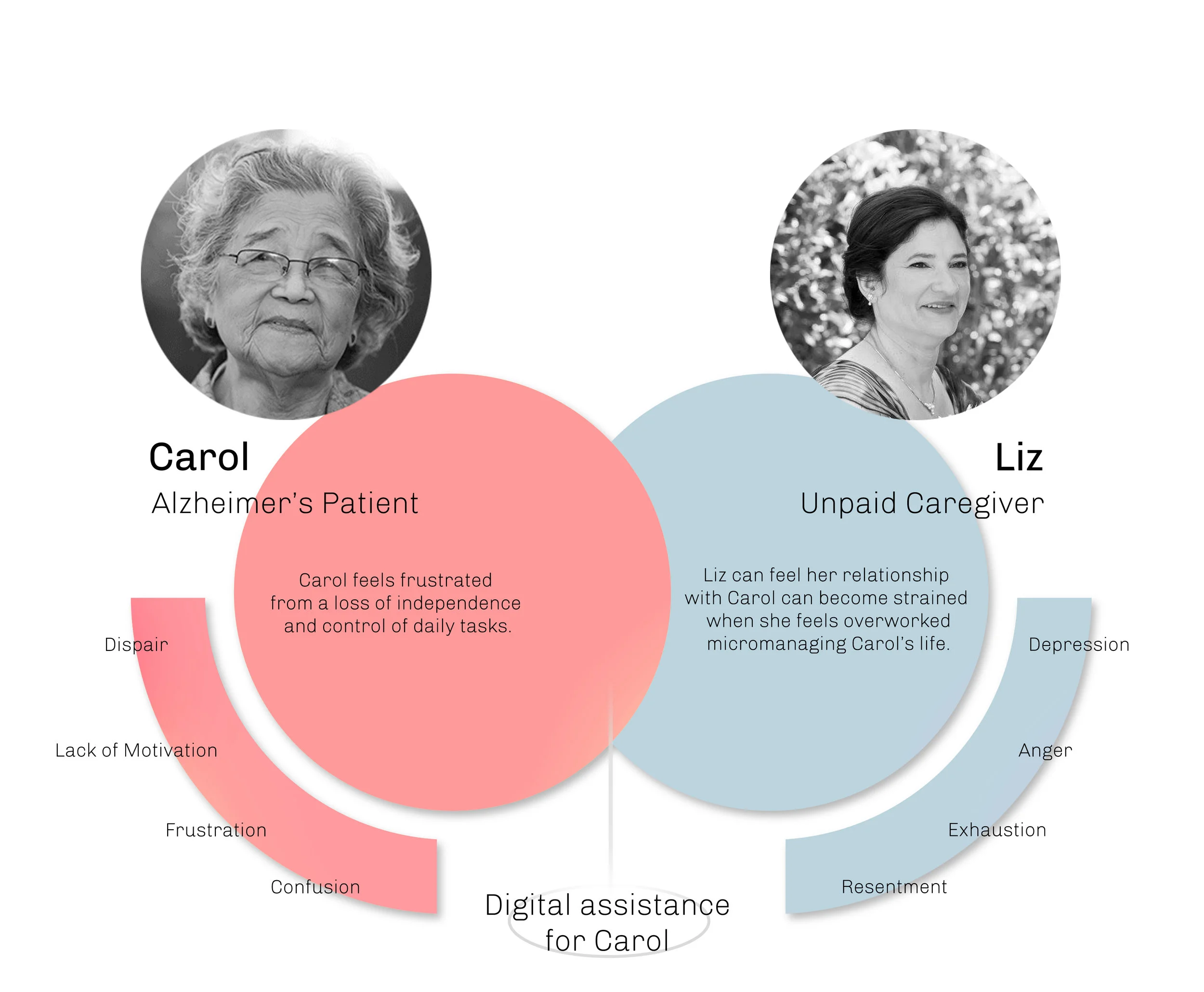
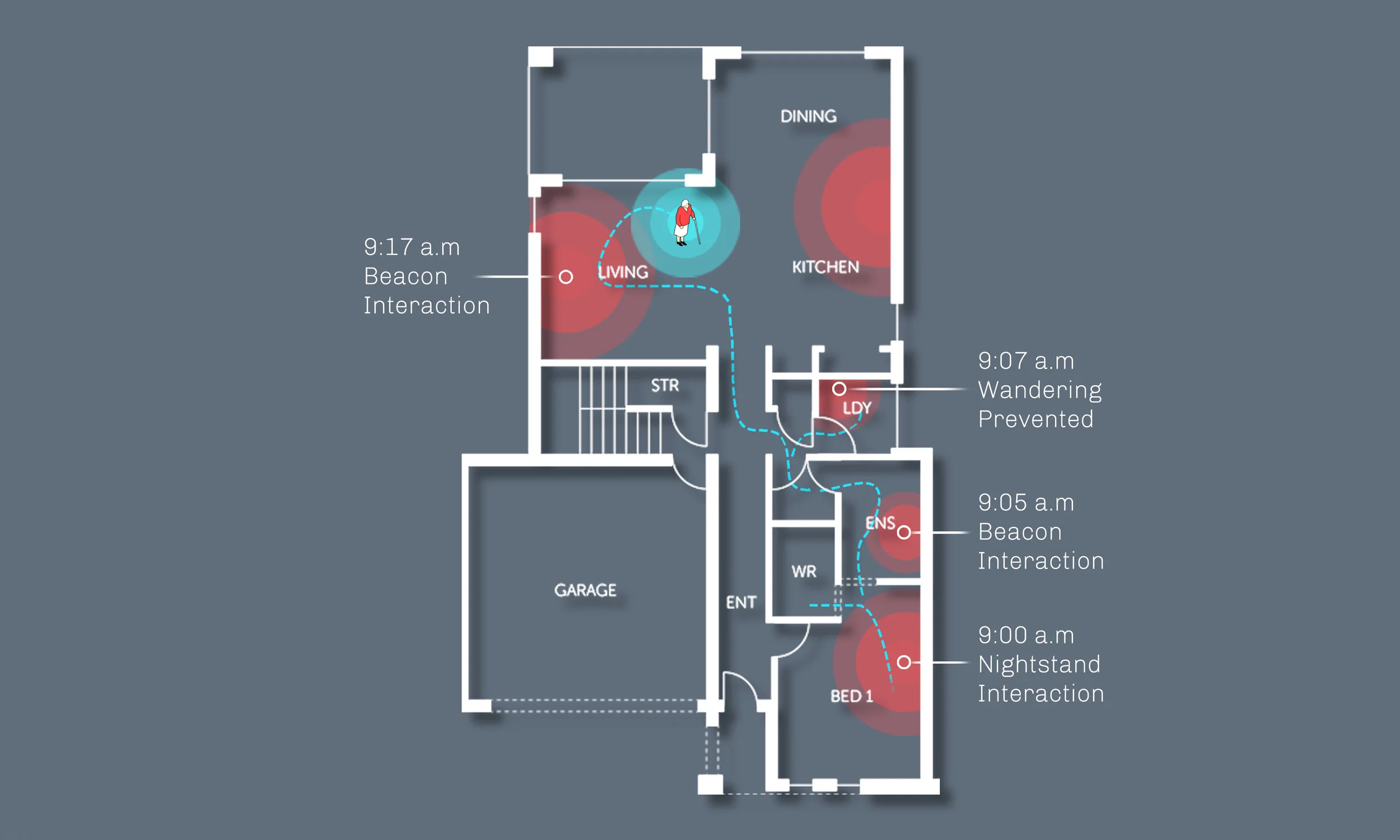
Alzheimer’s is a progressive disease that gradually causes abnormal changes in the brain, affecting memory, verbal expression, behavior and other mental abilities. This makes daily routines difficult for patients without the near constant assistance of an unpaid caregiver.
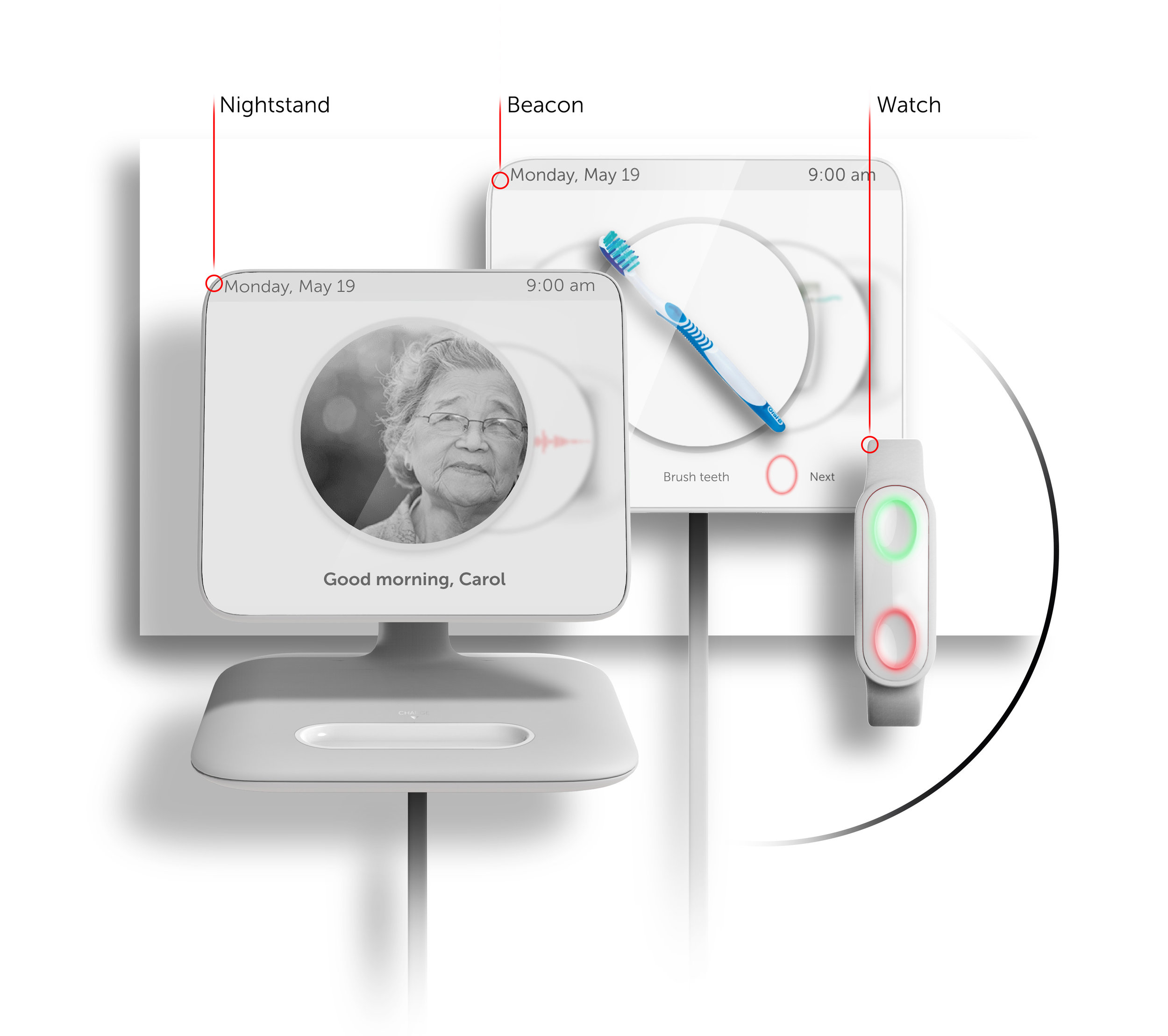
Touchstone is a family of products that reminds and guides patients through essential daily tasks.
Solution
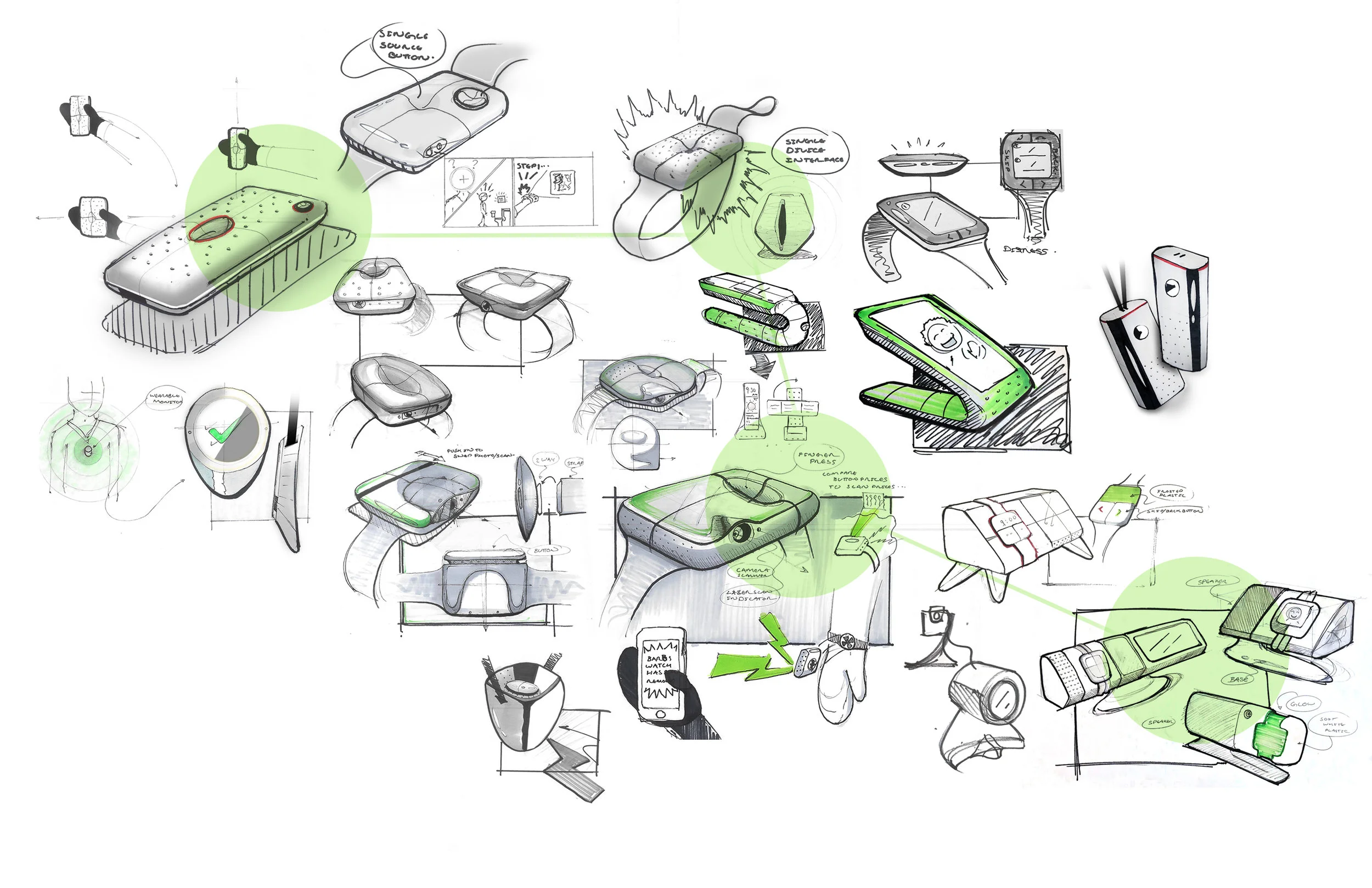
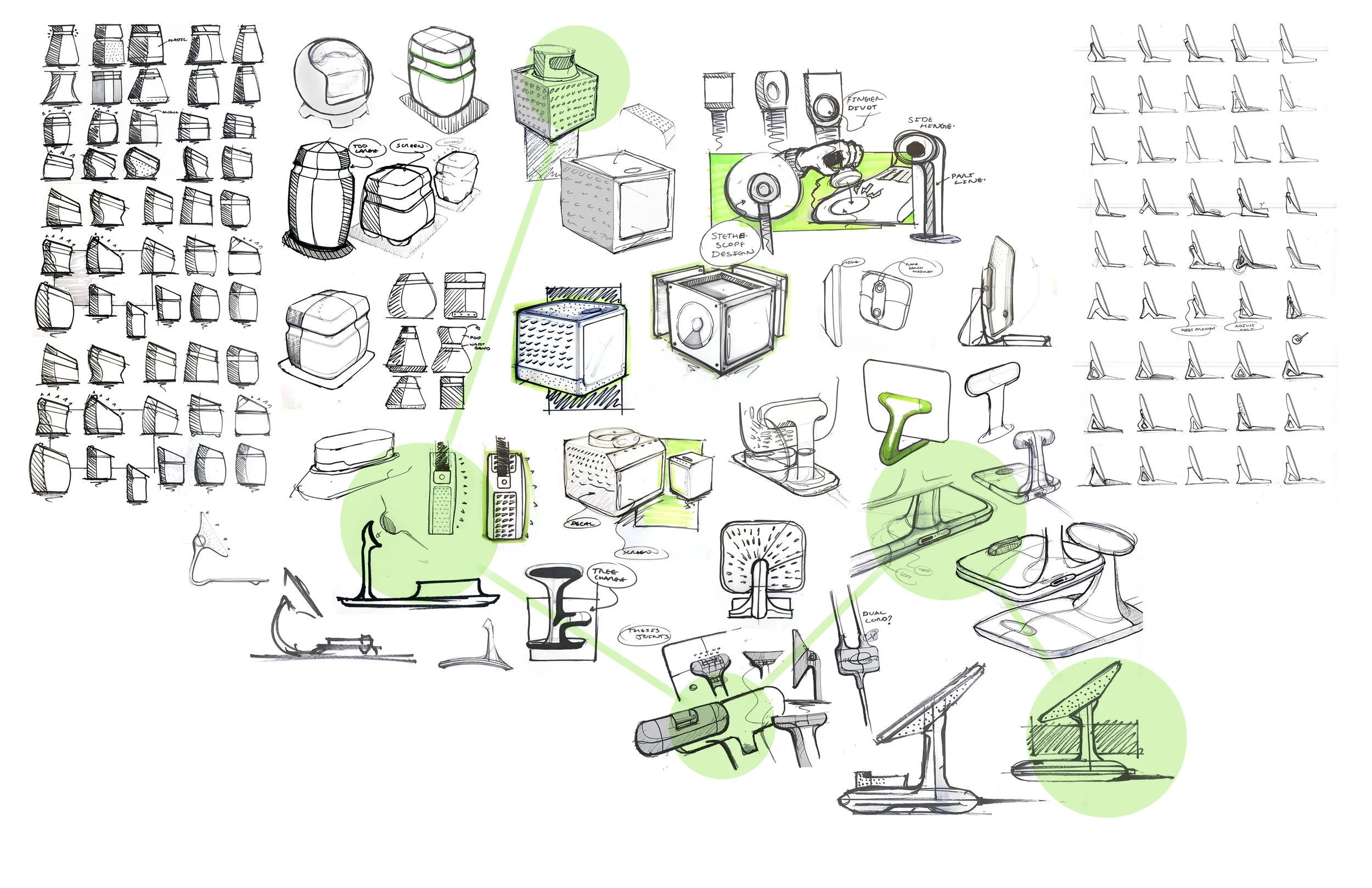
Concept Sketches
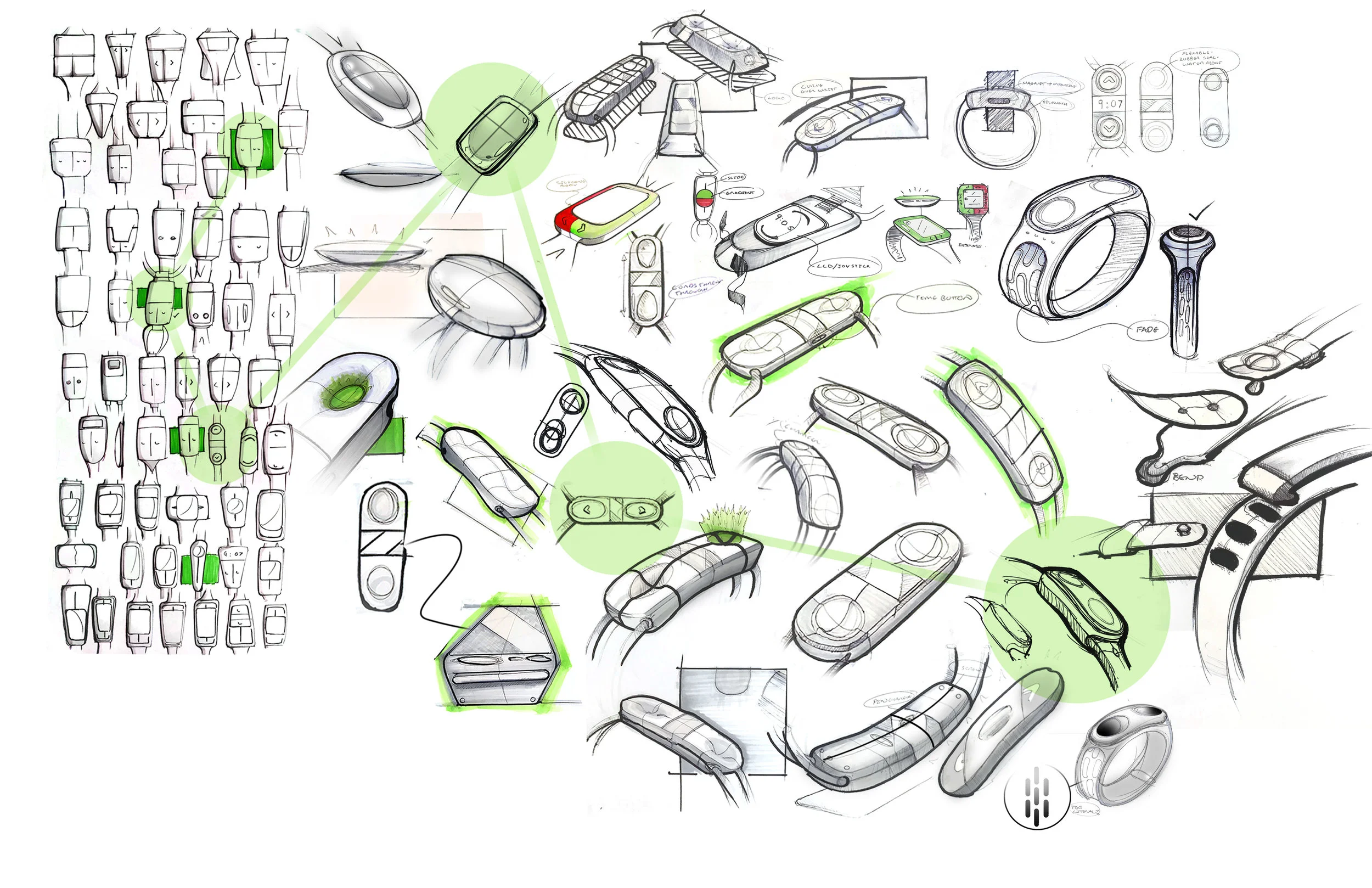
Working to explore methods of communication and activation addressing Alzheimer’s needs.
Strategic CMF
Refined hues and contrasting materials support detail differences and work to focus a users attention to a bright color interaction, ingraining Touchstone's physical product into Carol's routine.
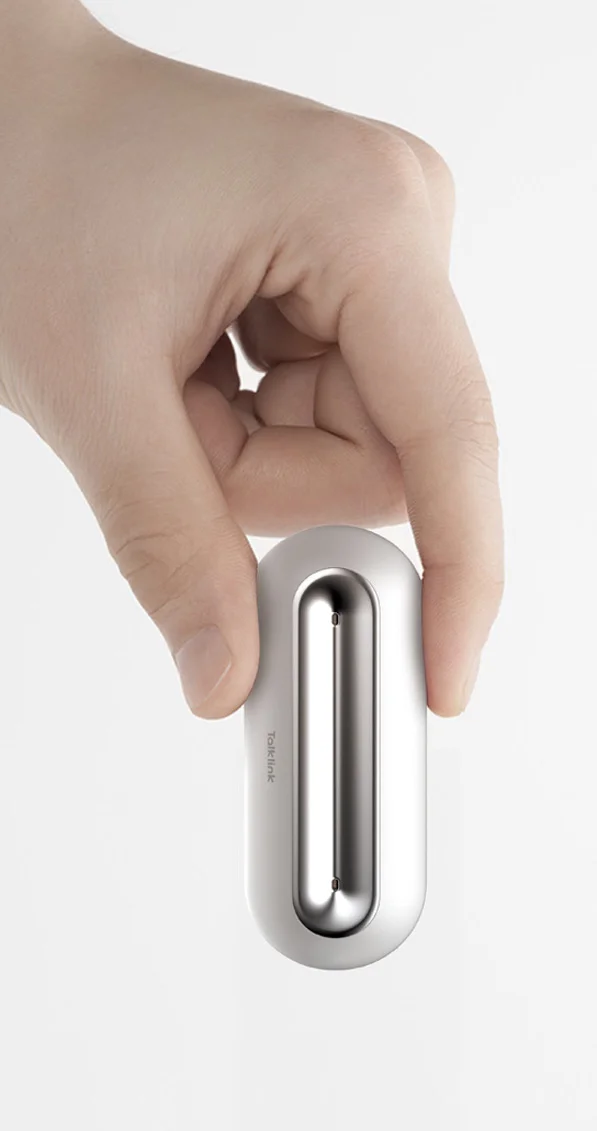


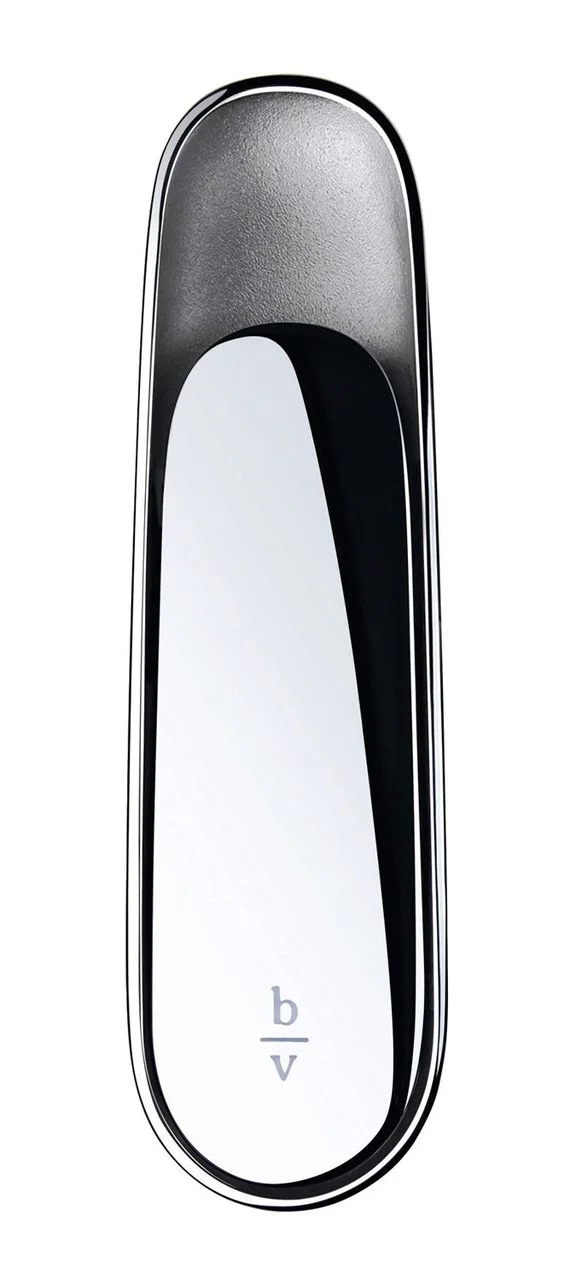
Product 1 | Watch
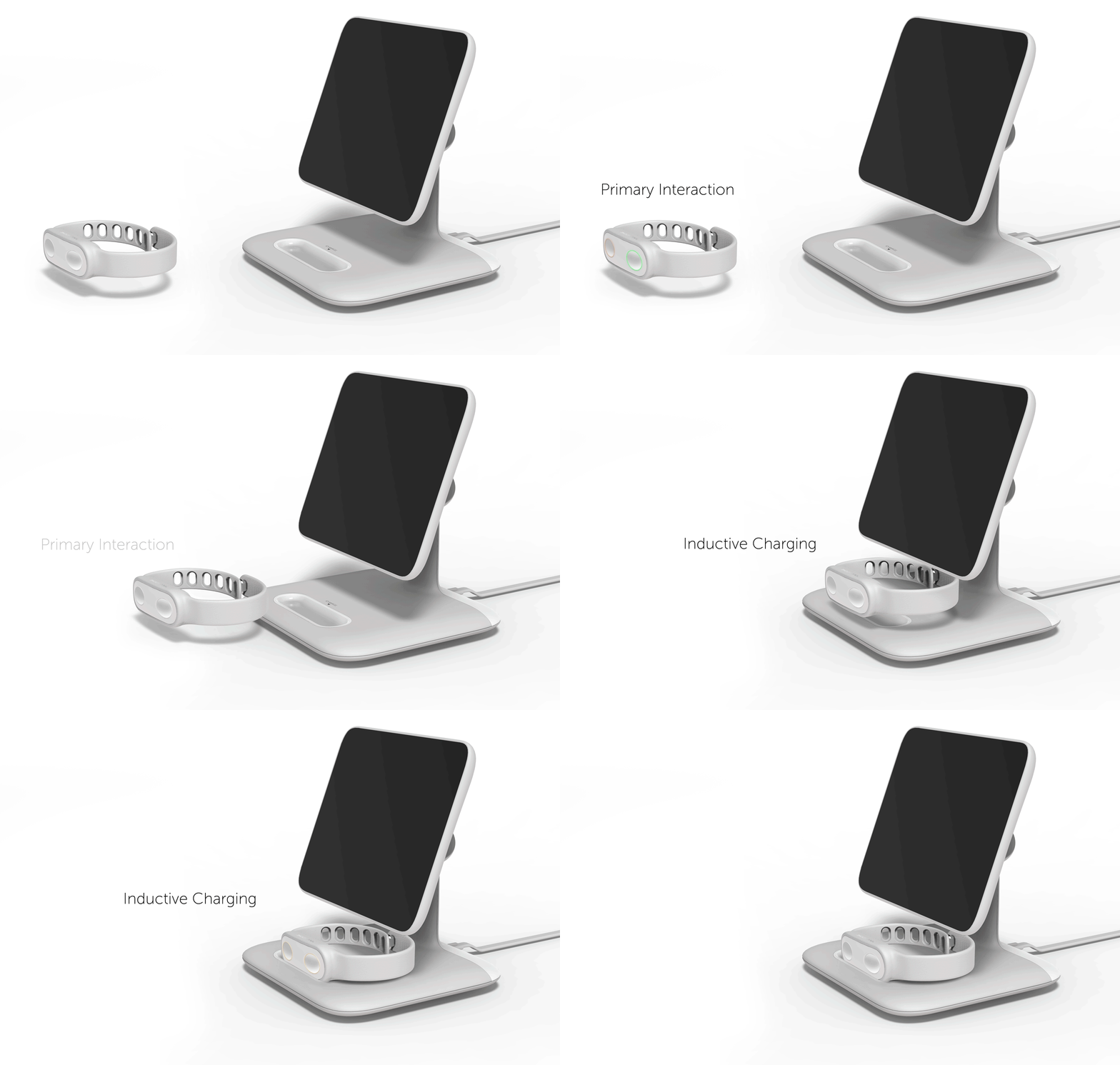
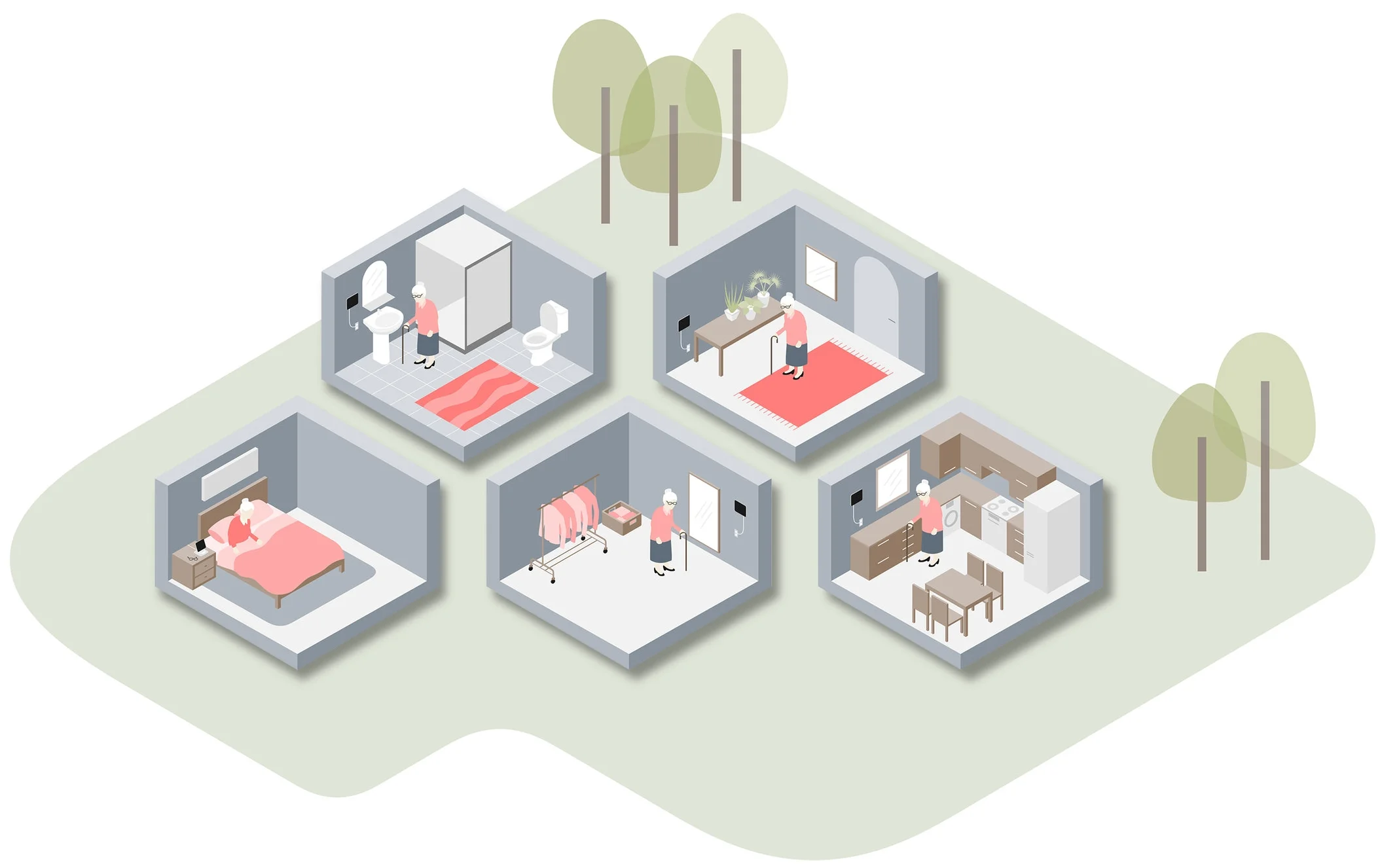
A watch is used to activate Beacons via proximity sensors throughout the house, preventing wandering and ensuring tasks are completed throughout the day.
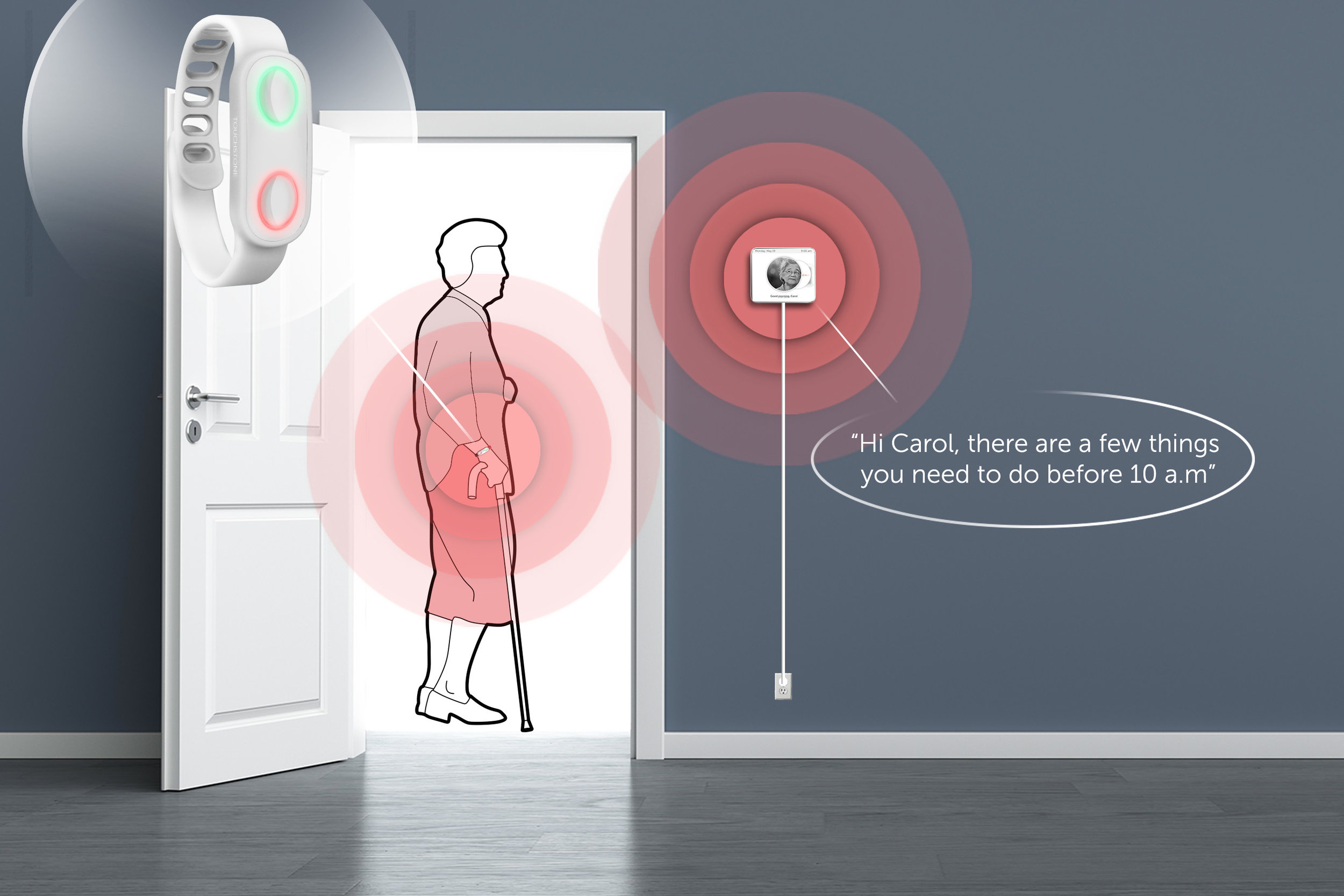
Watch Interaction
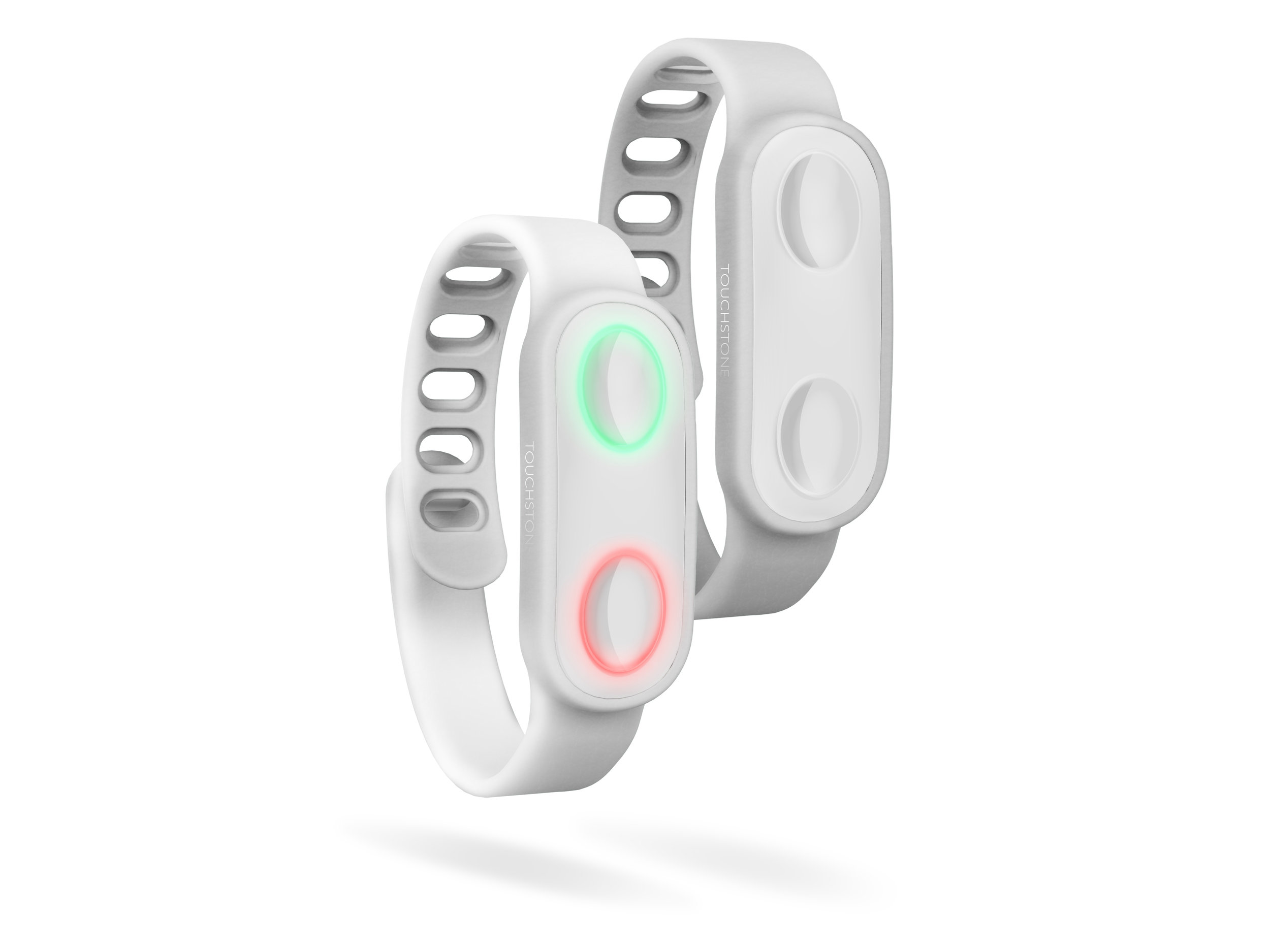
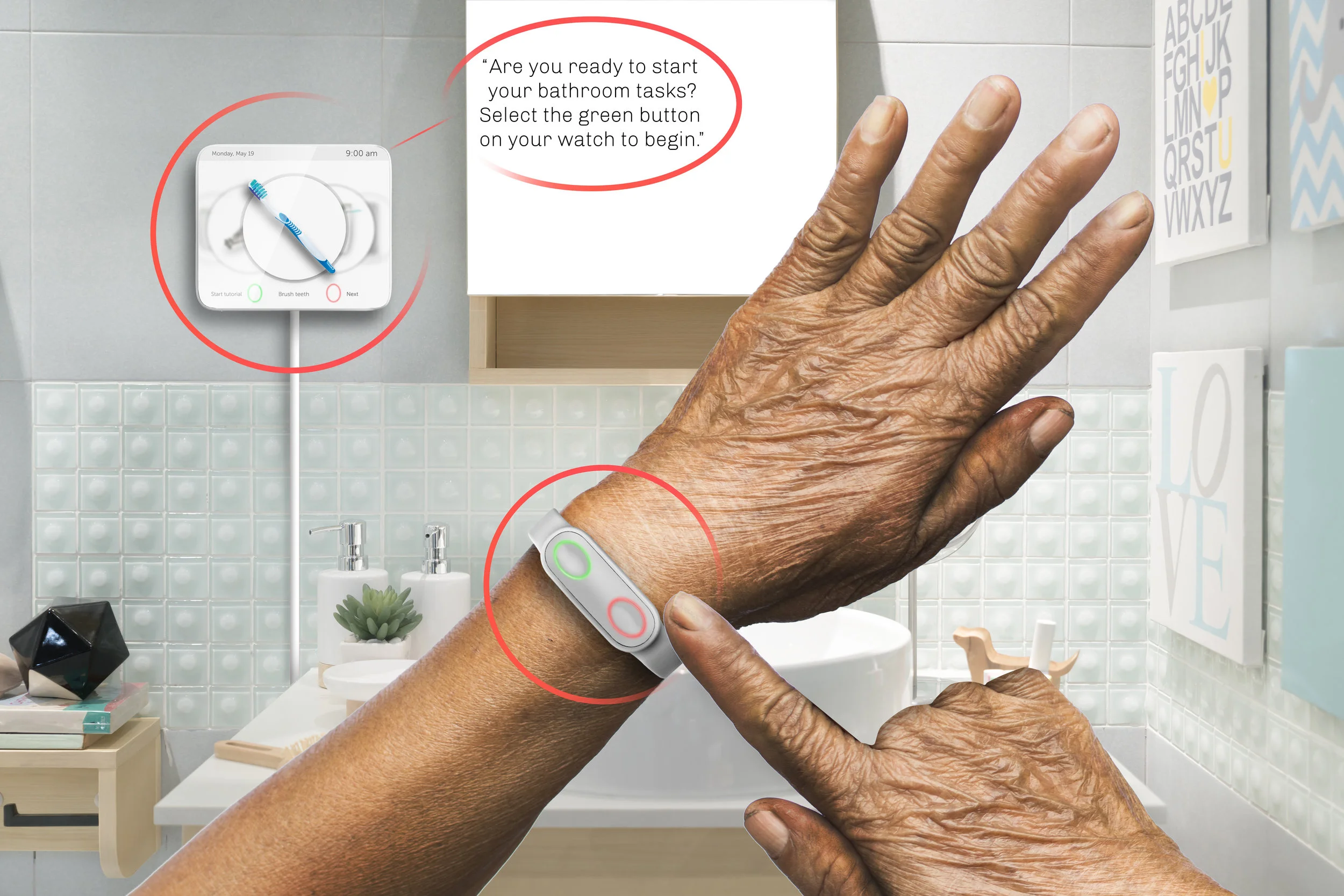
A white capacitive screen and a simple two button prompt work to ensure patients feel comfortable engaging with technology. Simply hold your finger over the green ring to engage with the tutorial, or red to advance to the next task.
The Band
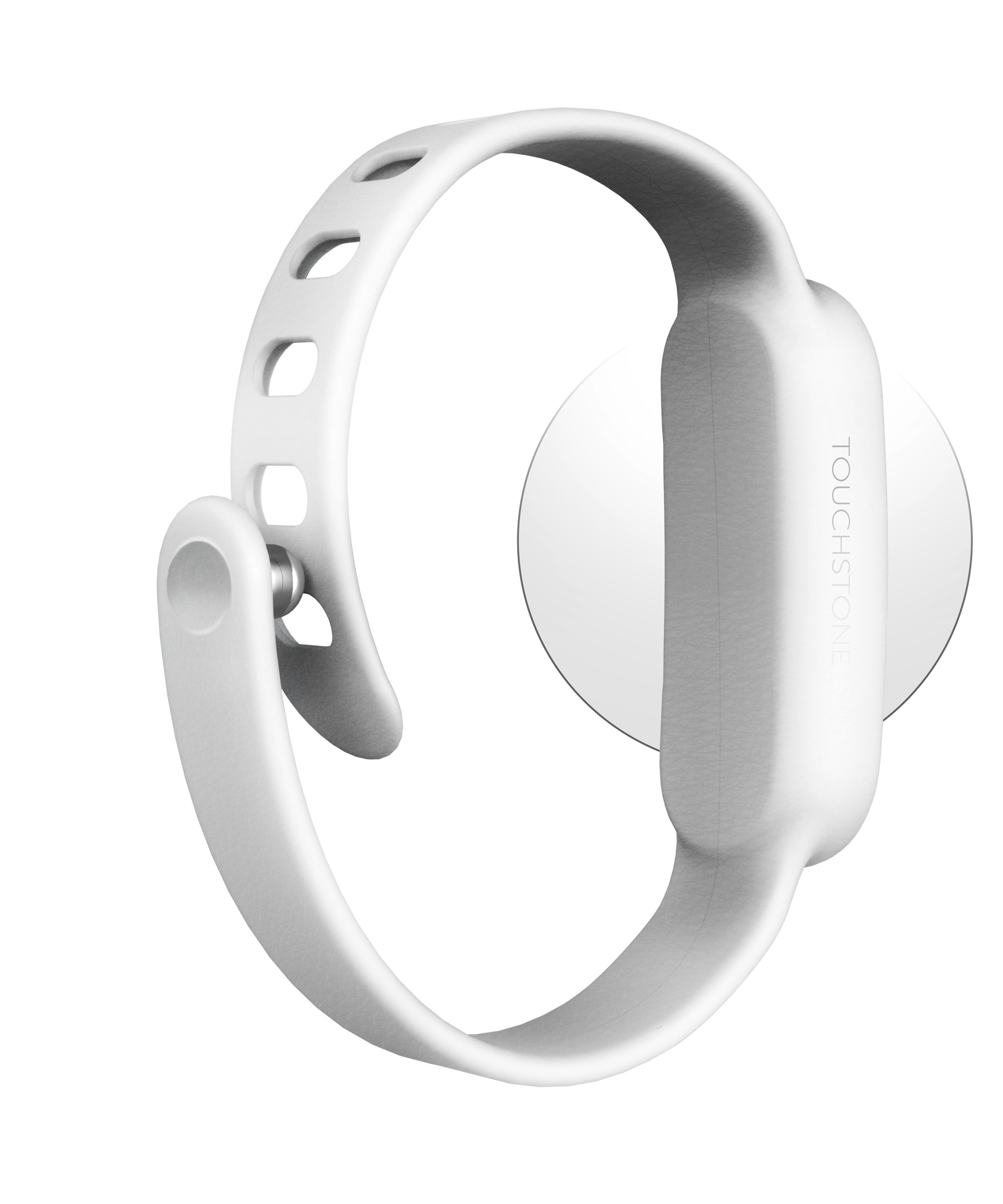
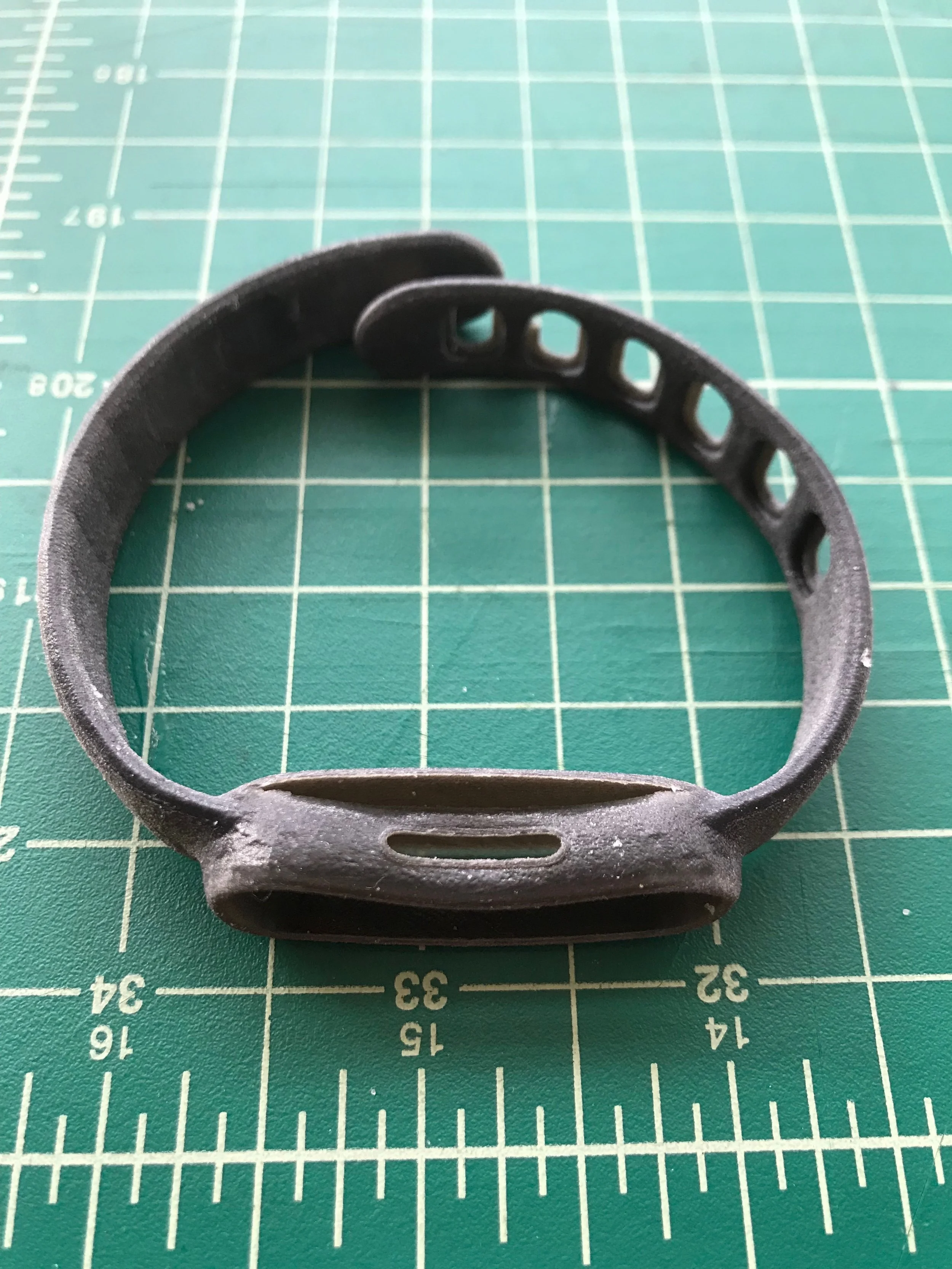
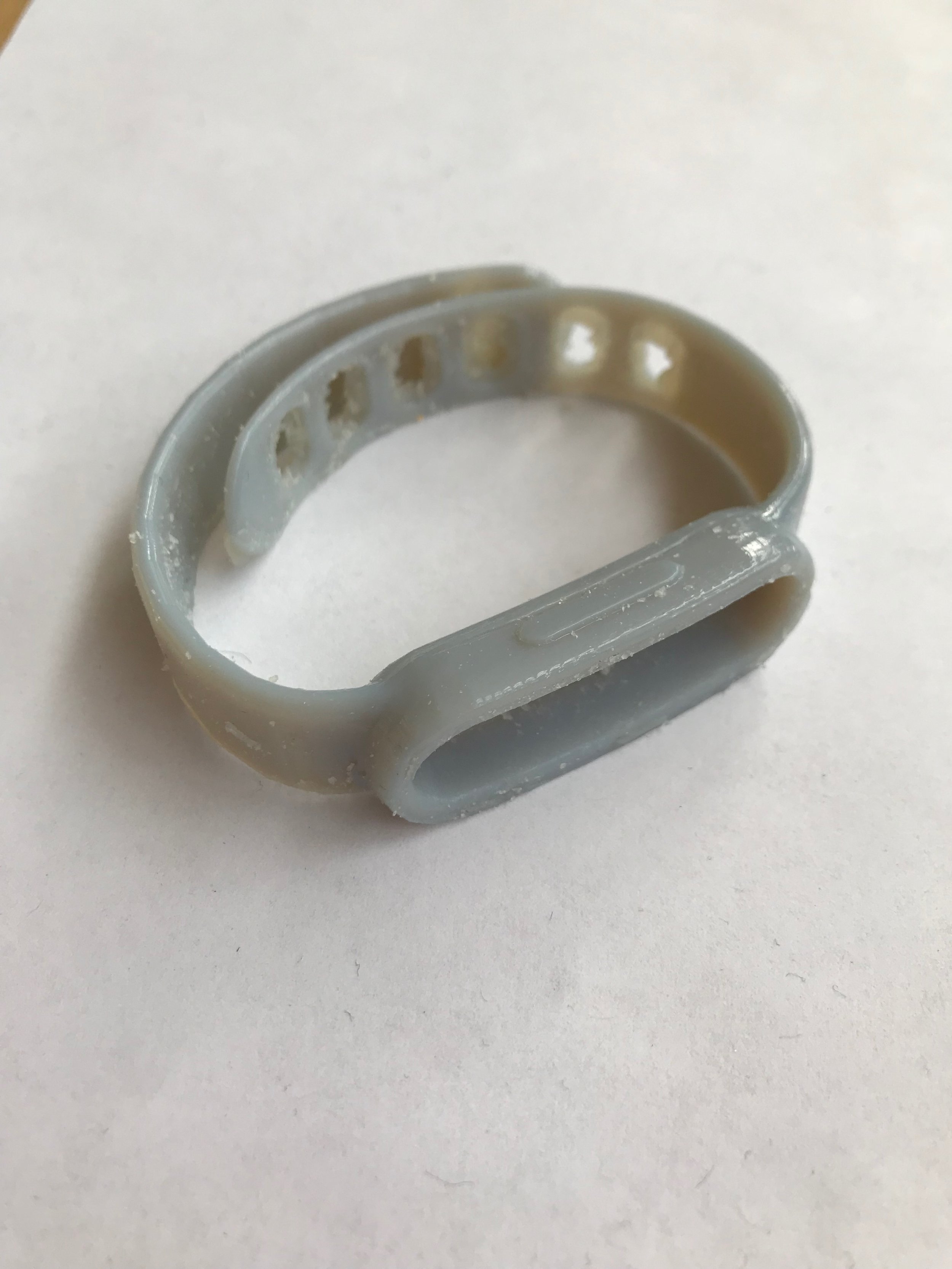
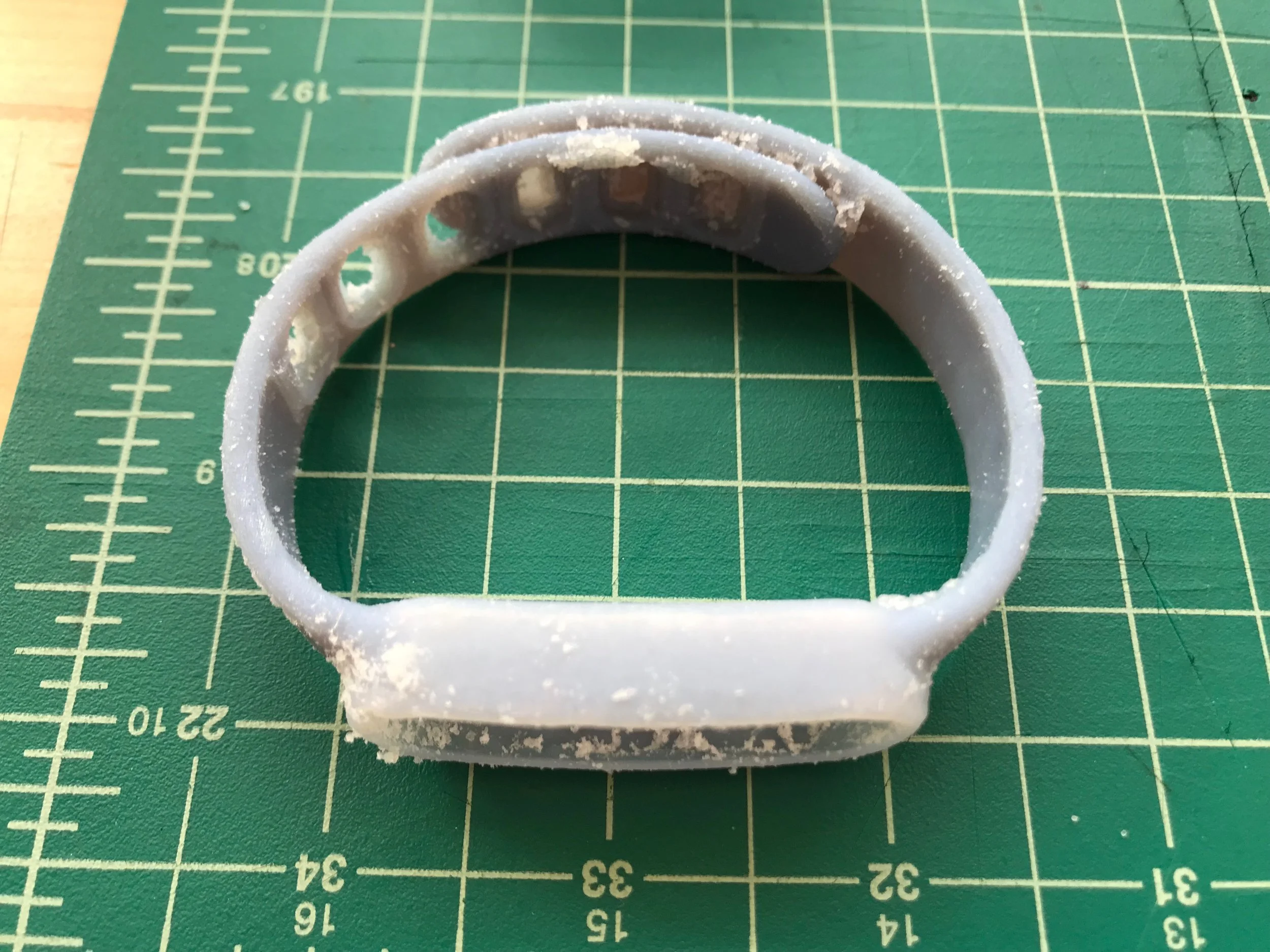
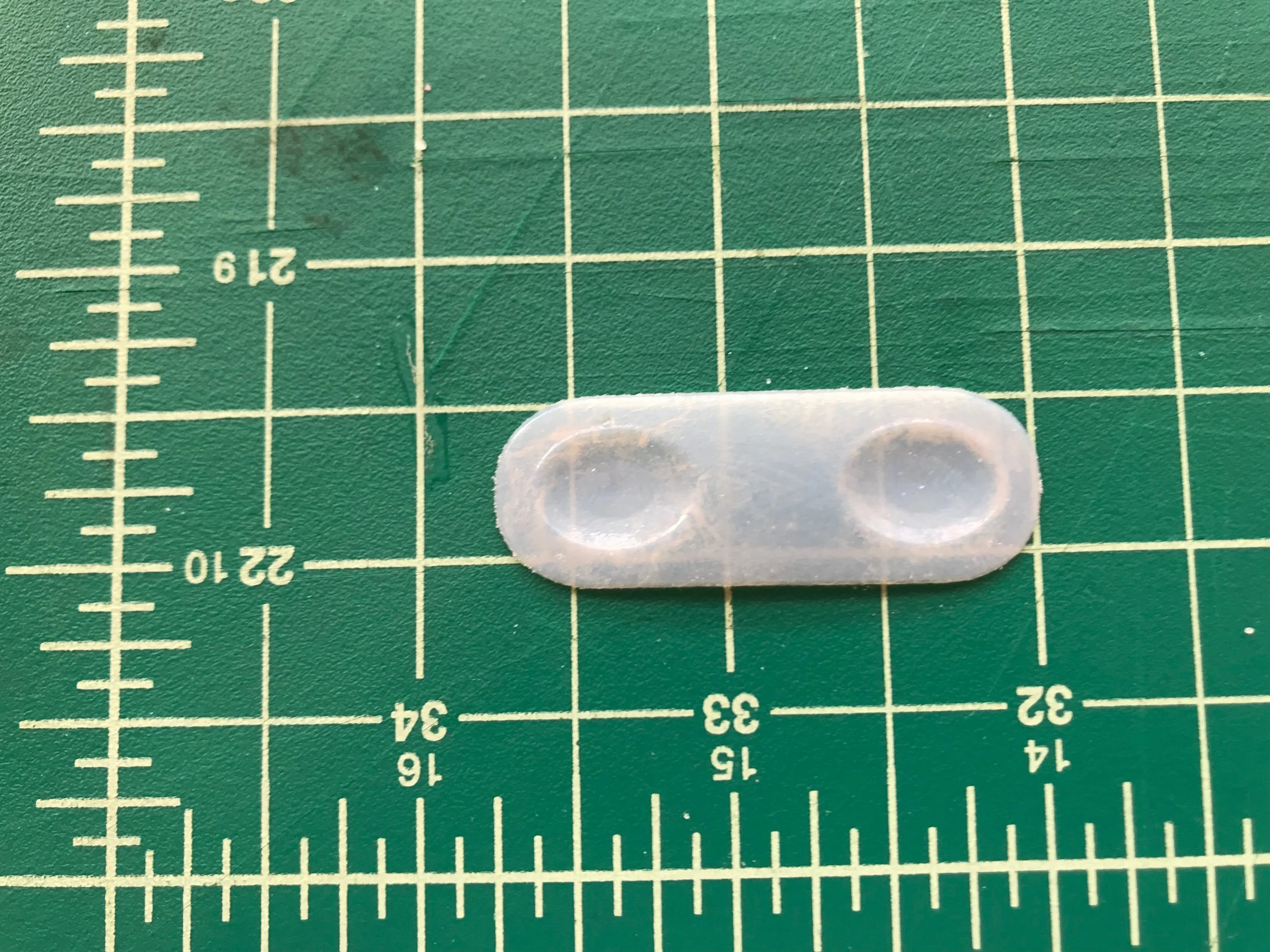
The silicone wristband can be secured by pushing a co-moulded metal pin through one of the large indents, and is designed to be easily separated from the electronic body to be washed periodically.
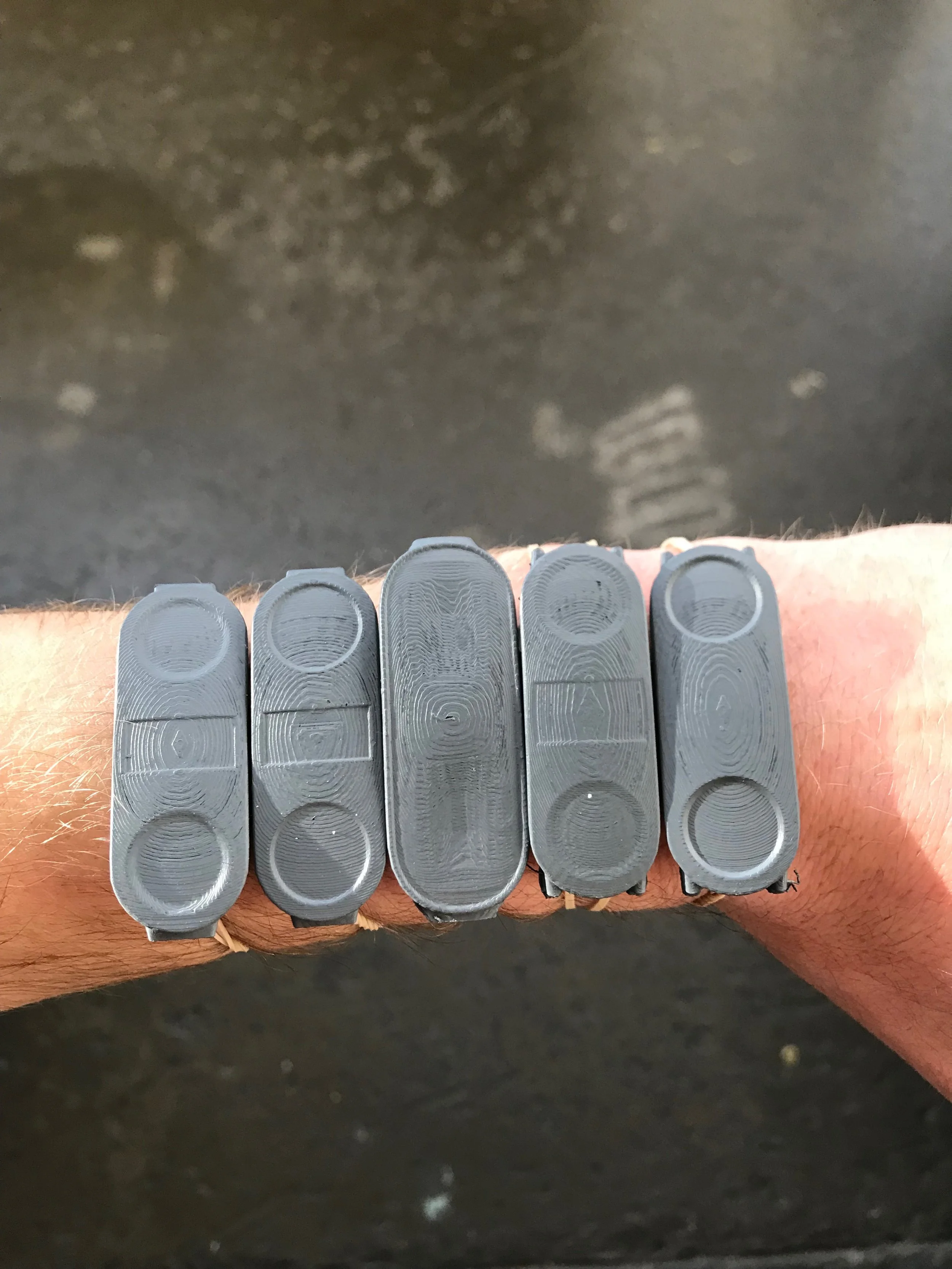
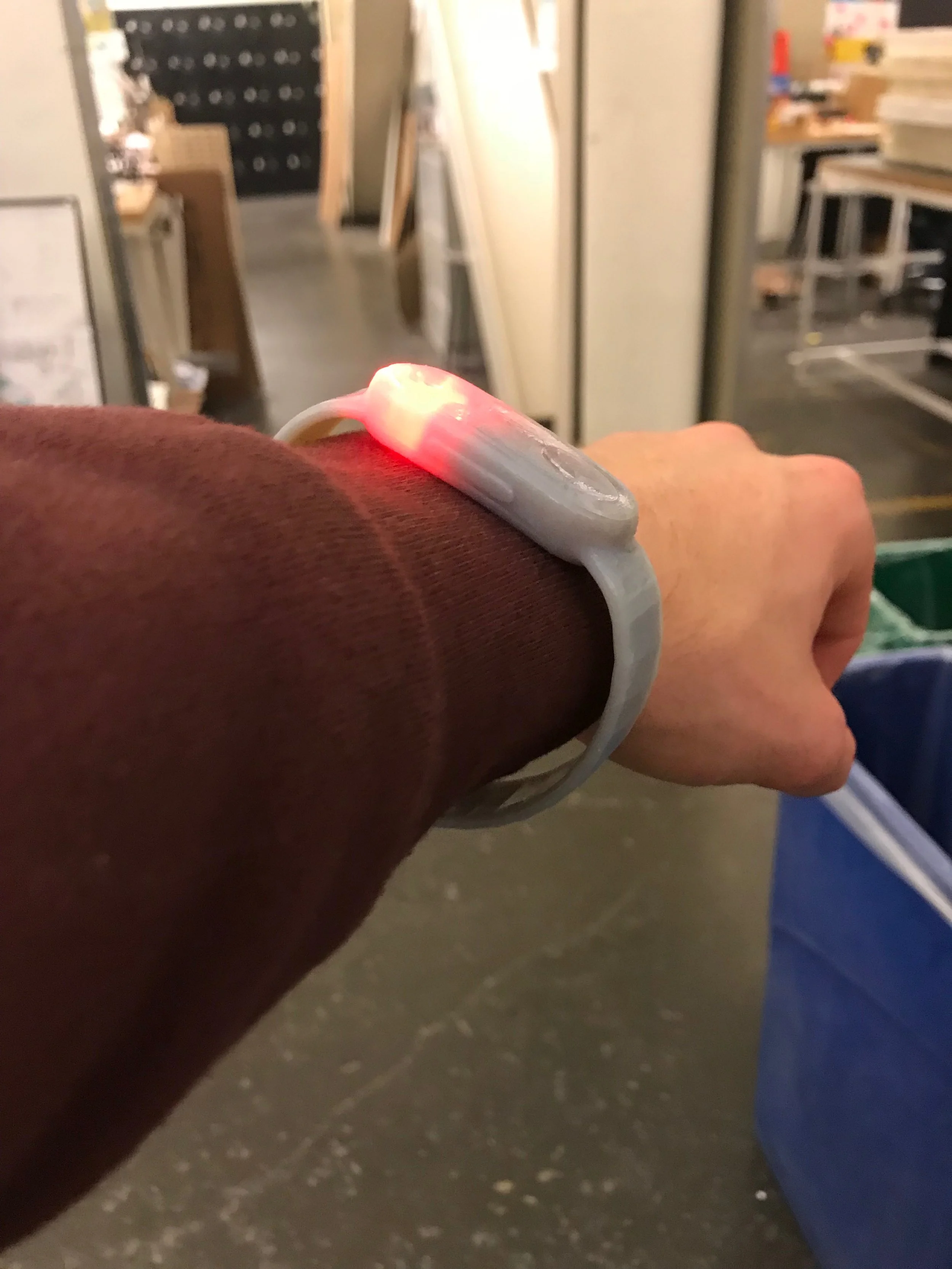
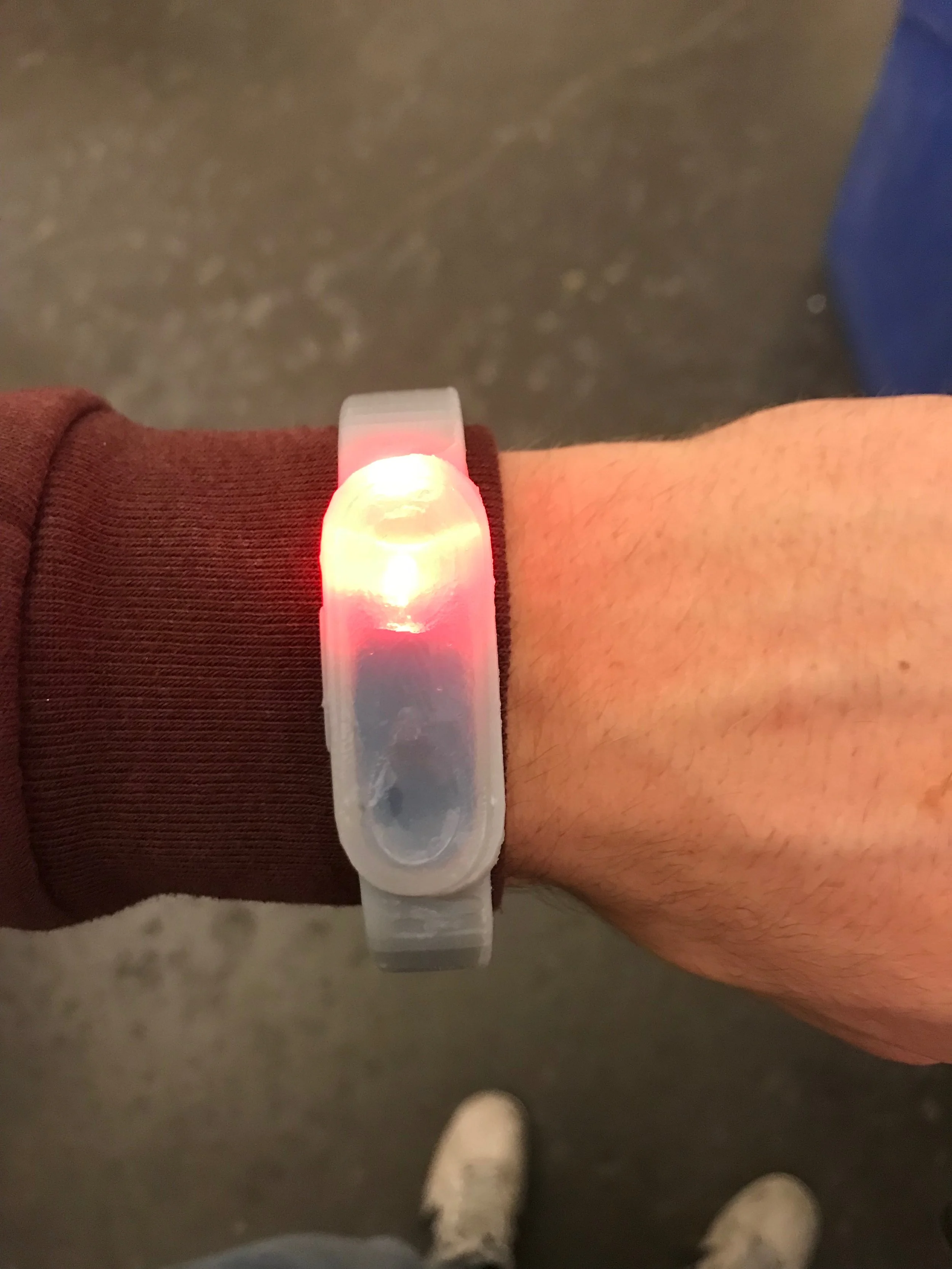
Watch Development
Touchstone’s Watch employs a simple two button interface. Product principles for those with Alzheimer’s focus on interface ease of use.

Product 2 | Beacon
Wall-Mounted Beacons guide and support an Alzheimer’s patient through essential daily tasks, such as brushing teeth and dressing appropriately.
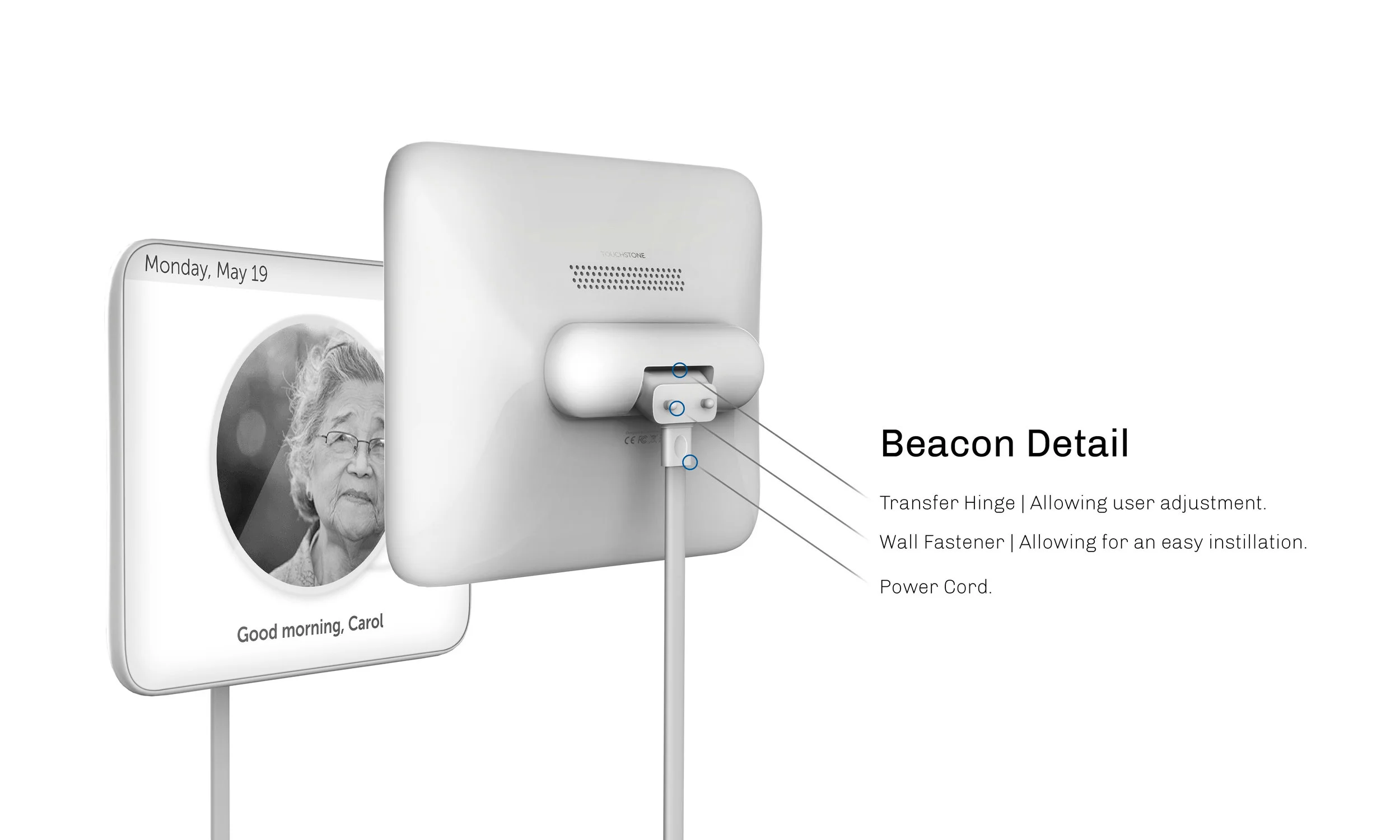
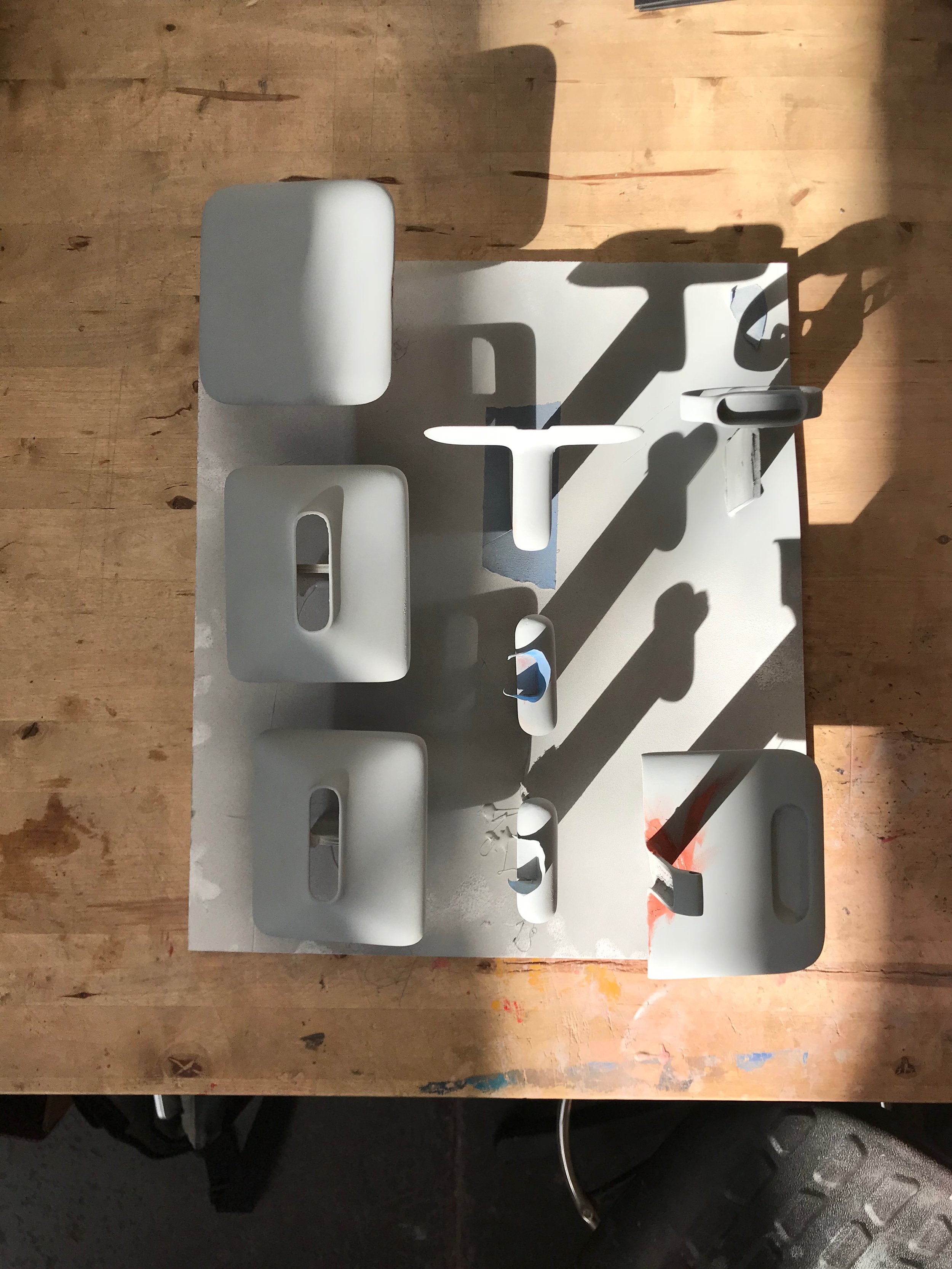
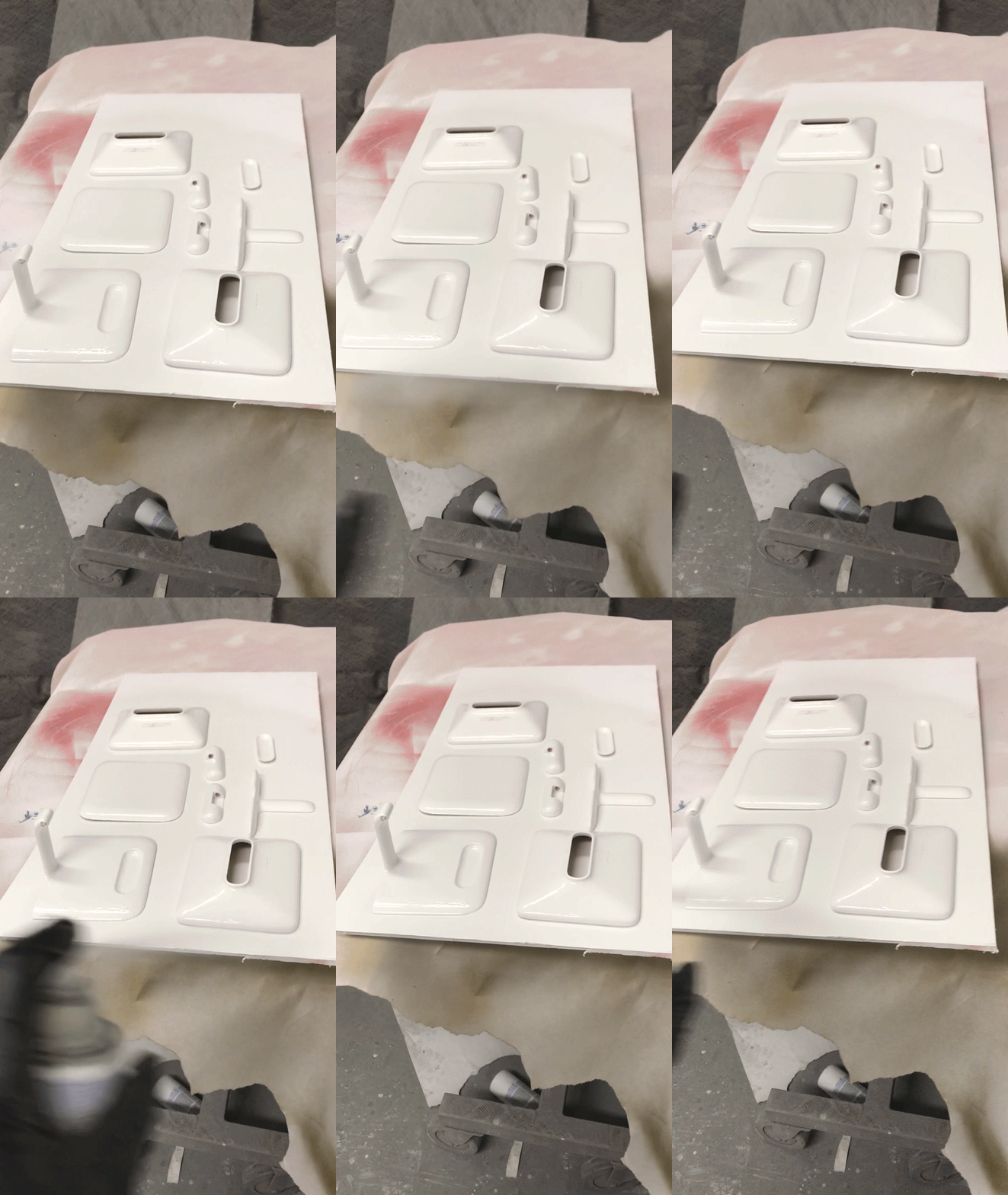
Beacon & Nightstand Development
Image and voice activated units were designed to tie into Touchstone’s form and CMF identity. Clean, elegant and intuitive, these units were developed to address significant issues facing Alzheimer’s patients.
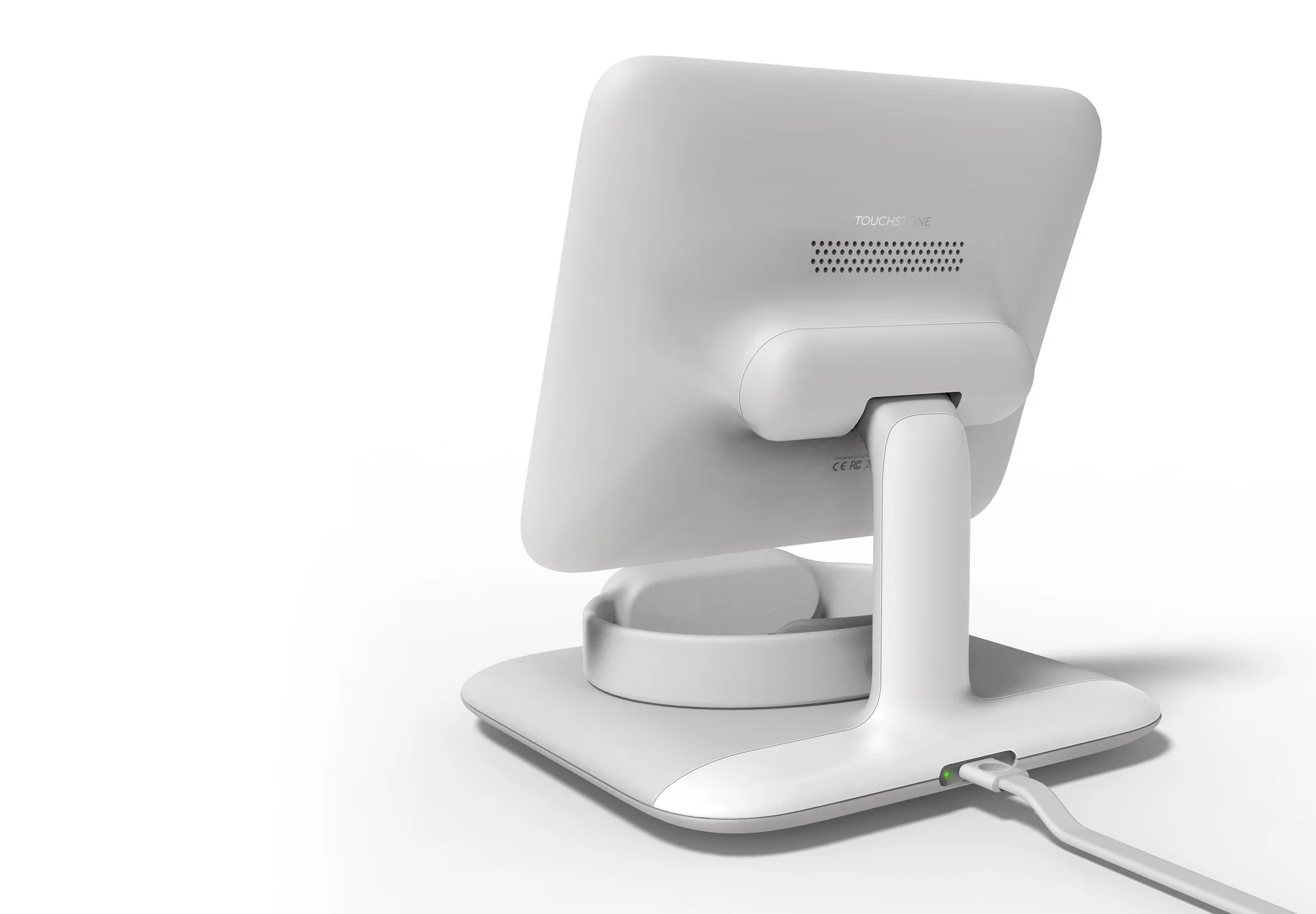
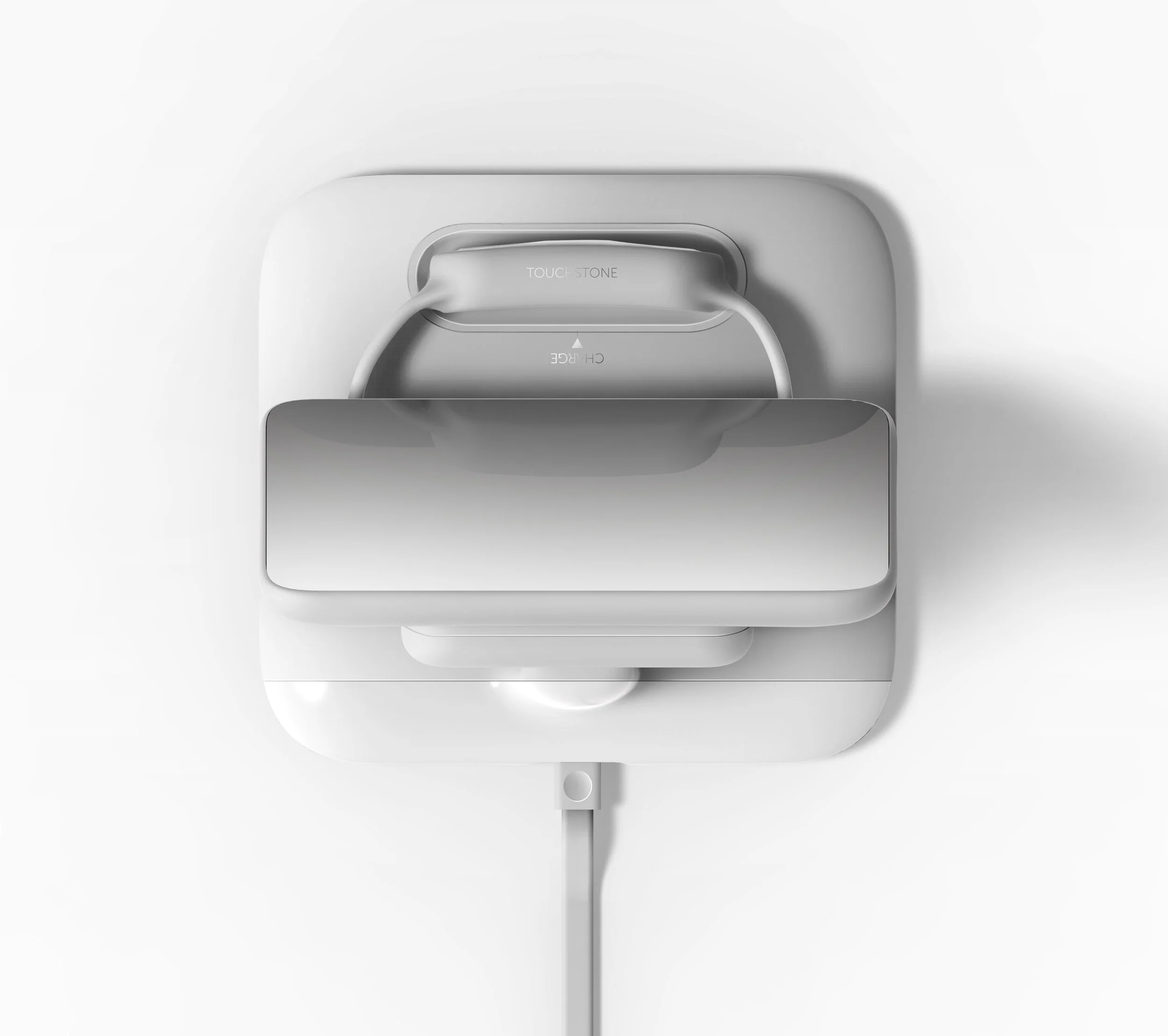
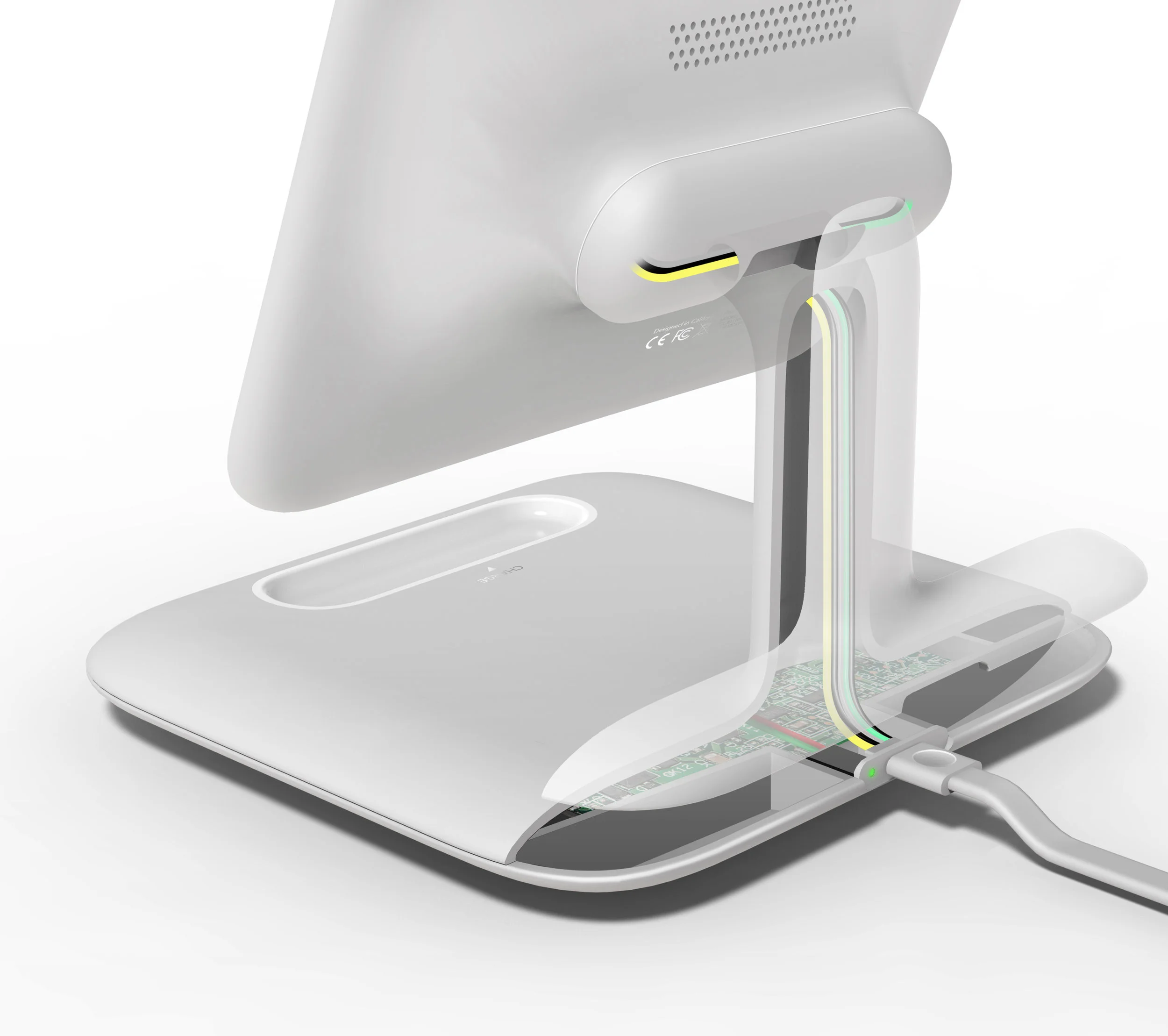
Product 3 | Nightstand
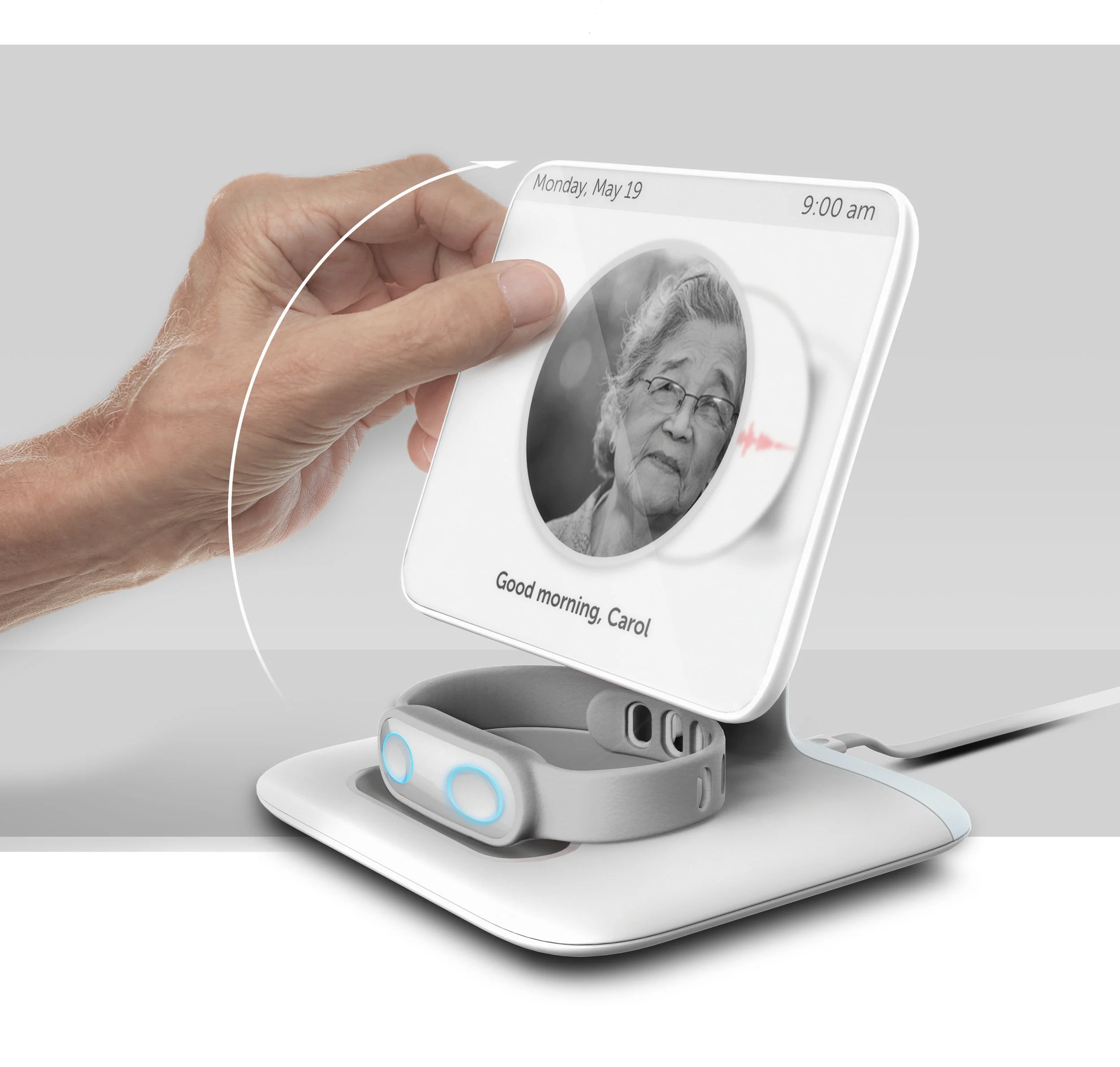
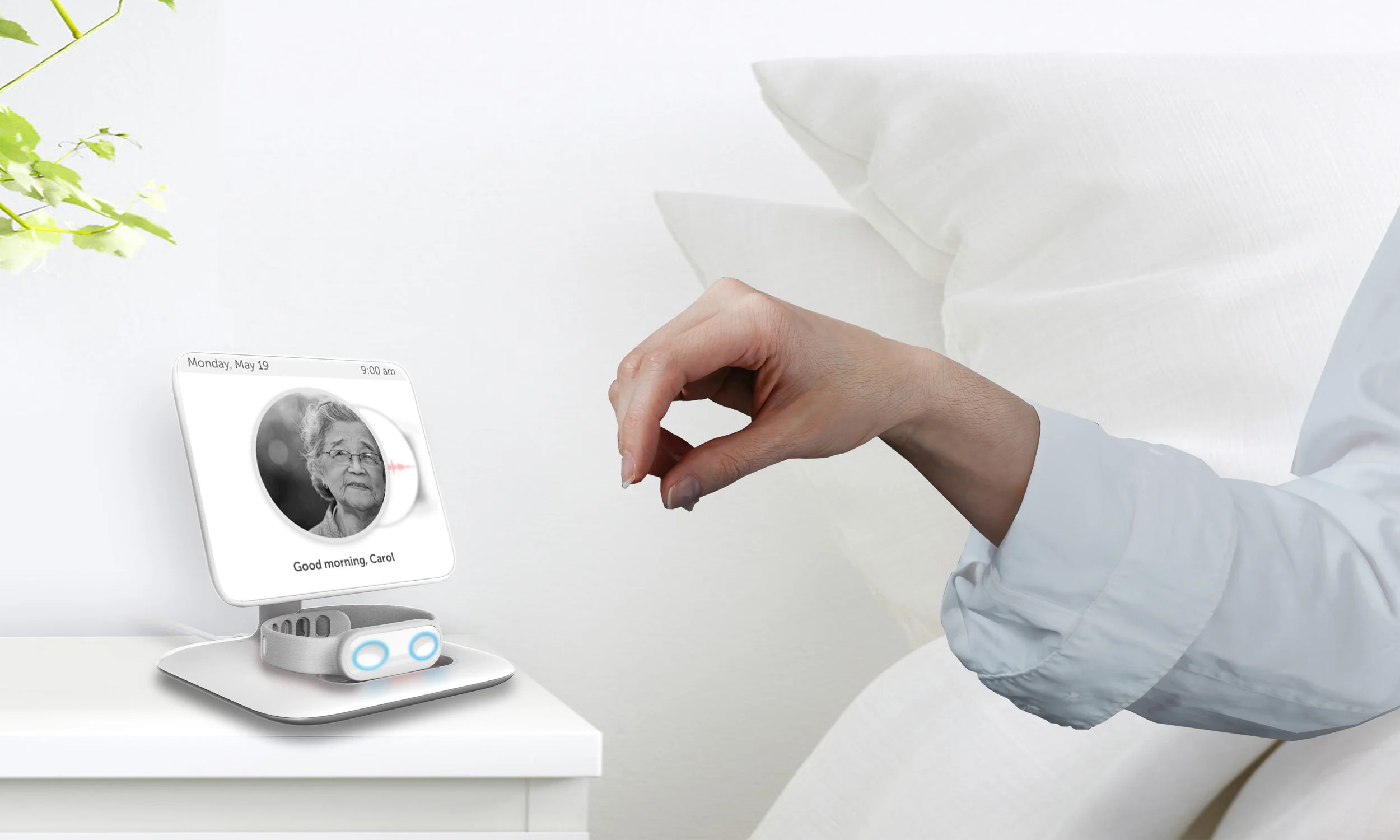
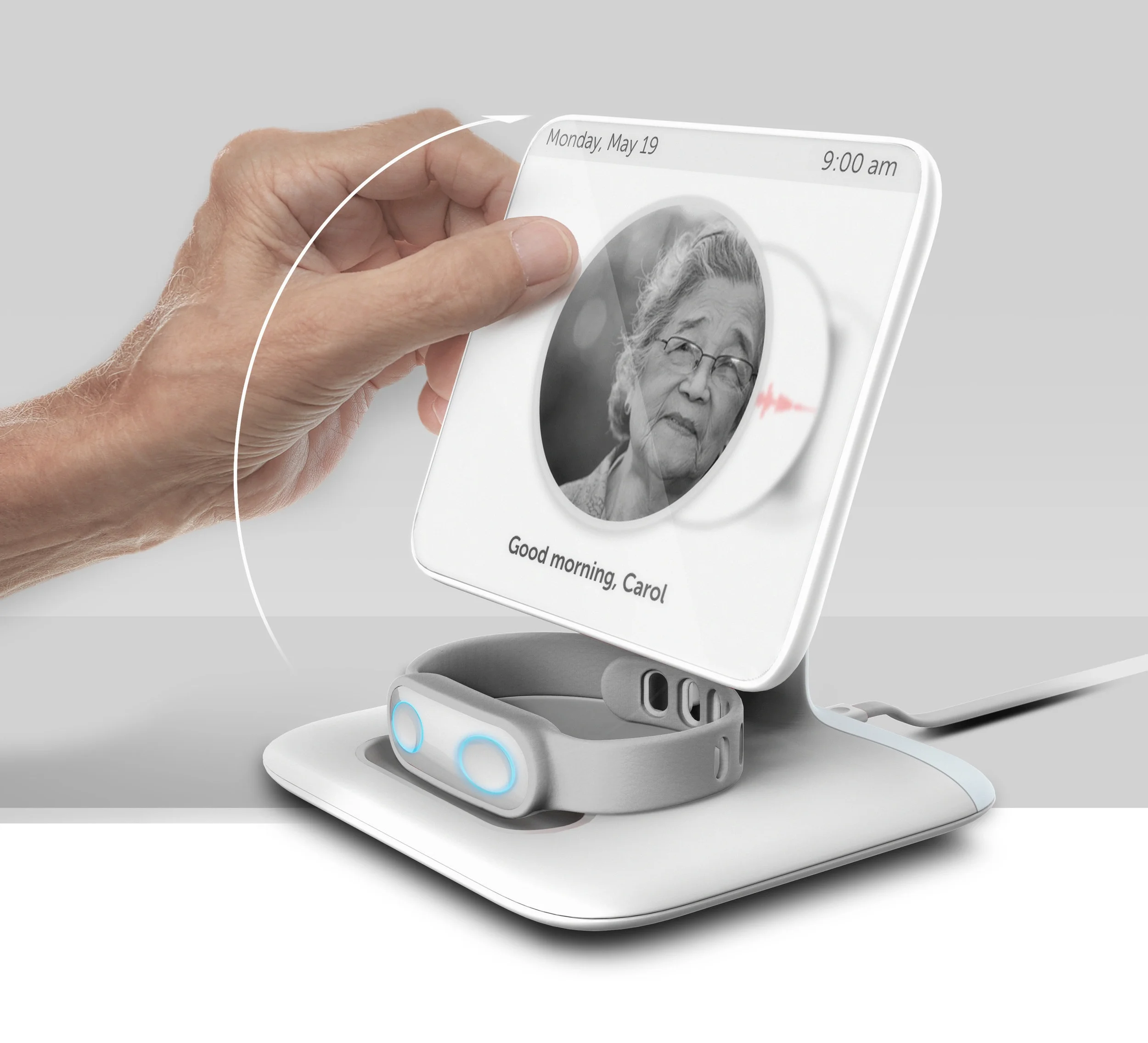
The Nightstand acts as a charger for the Watch and provides daily context for an Alzheimer’s patient. It is intended to stop confusion, panic and wandering that is common among Alzheimer's participants. By reorienting a user on date, time, weather, calendar and chores that need to be completed, a patient can feel confident in getting the day started without relying heavily on the assistance of an unpaid caregiver.
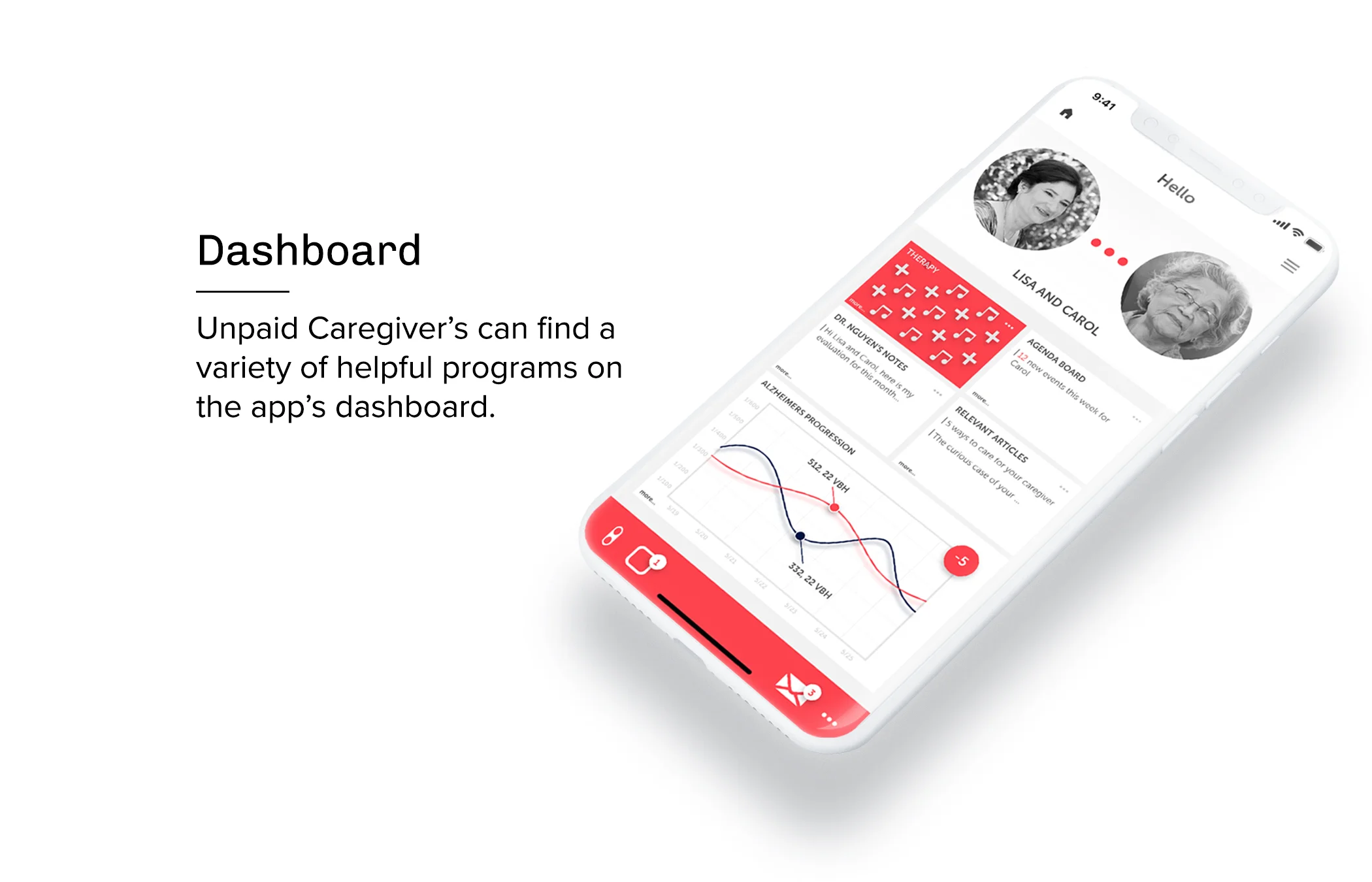
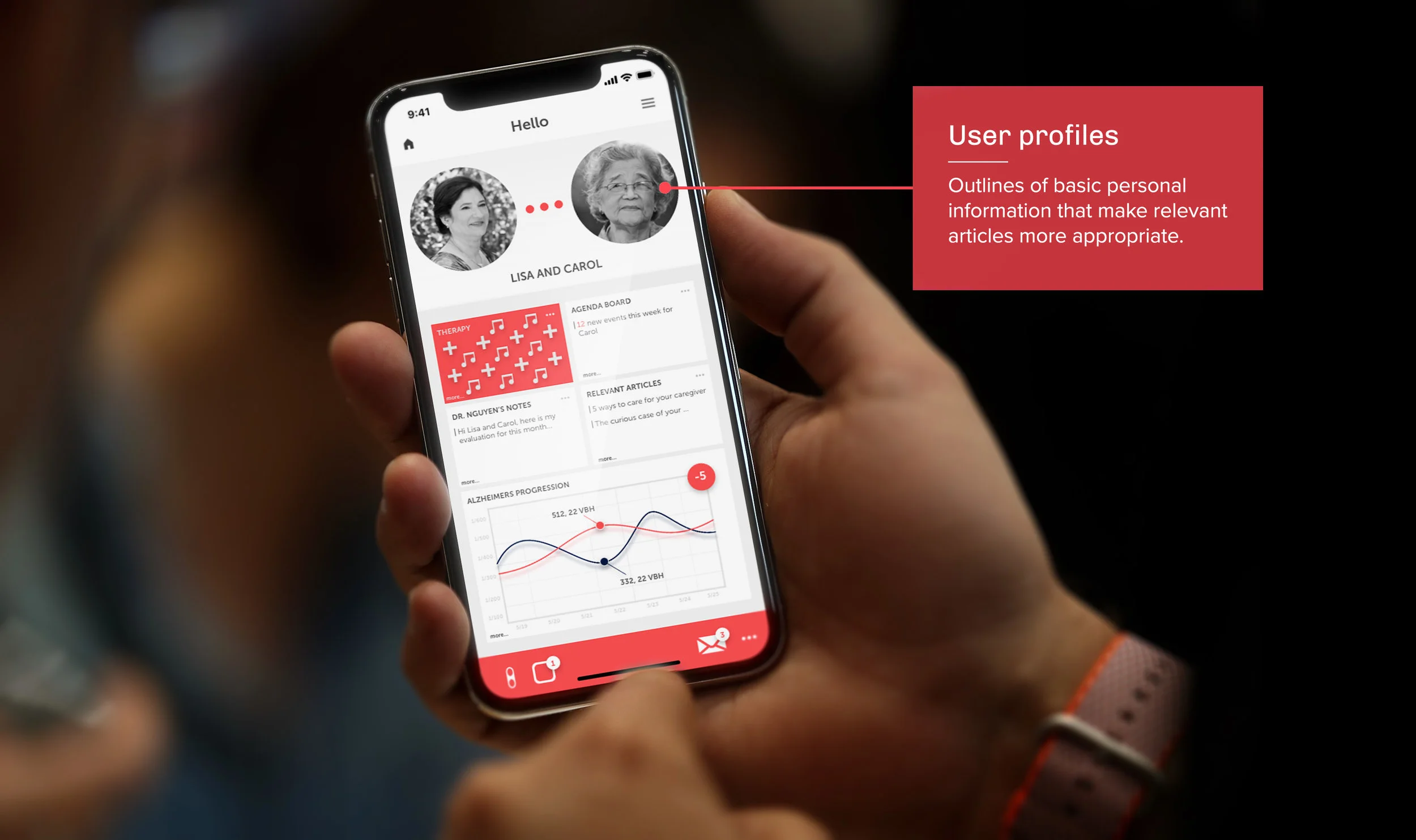
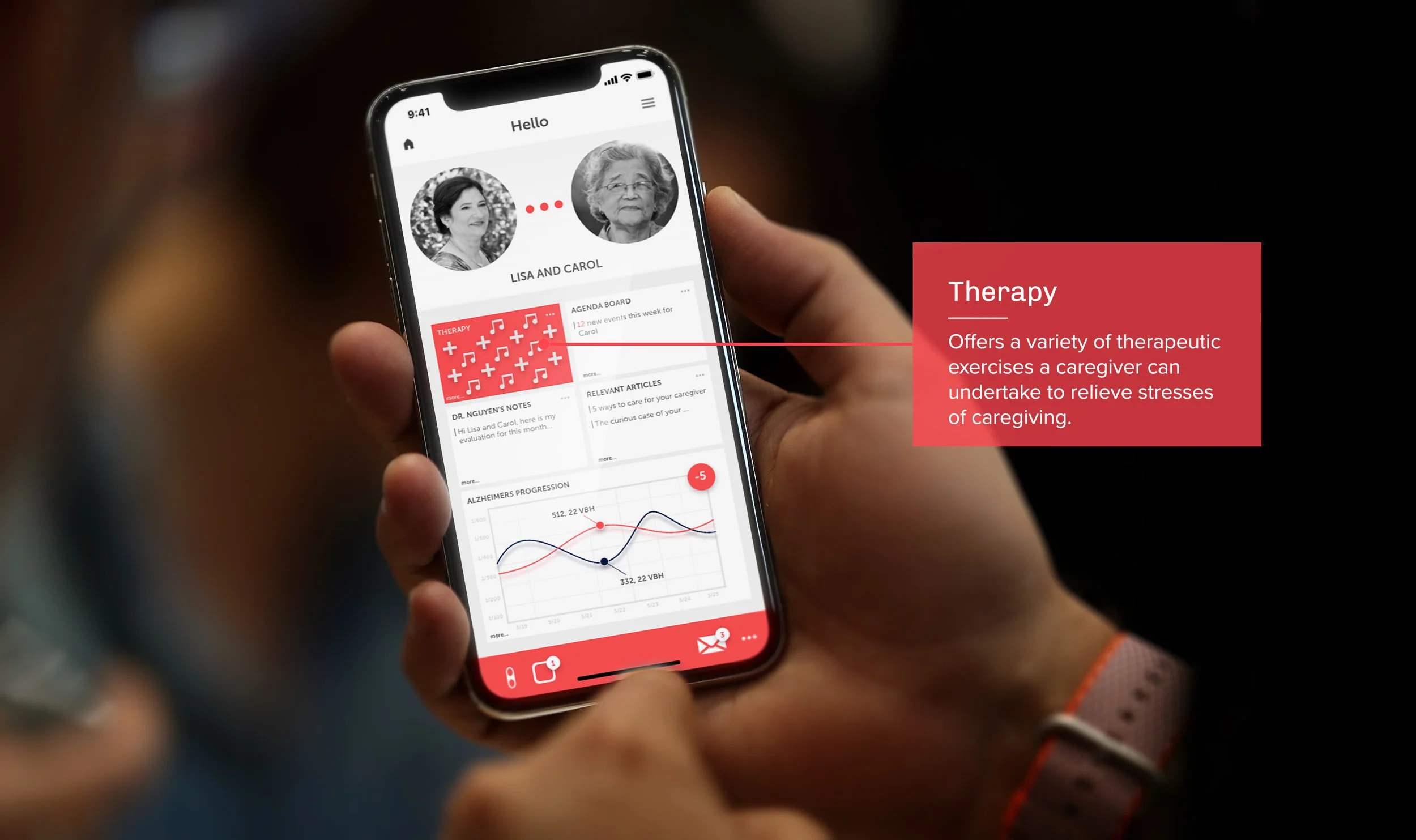
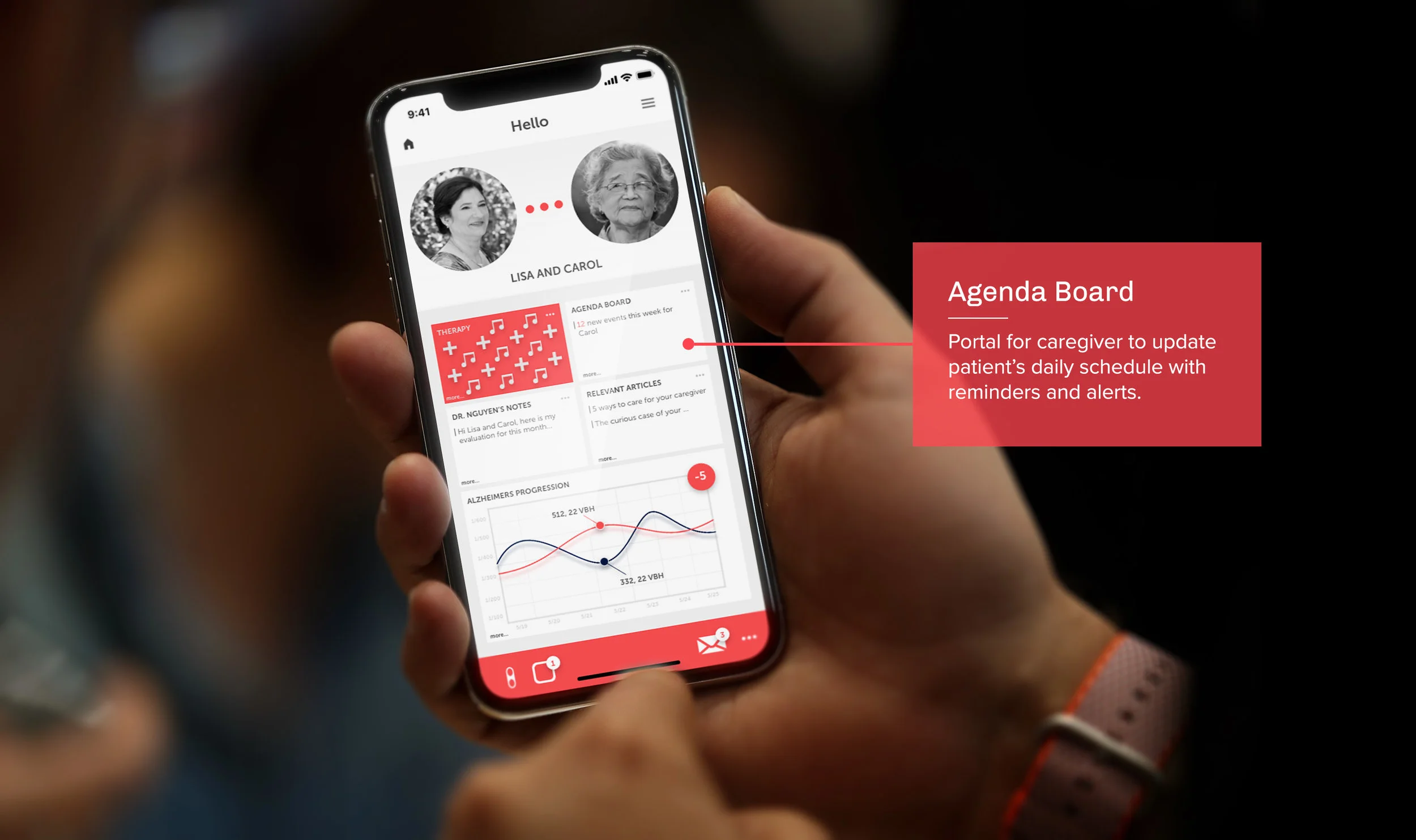
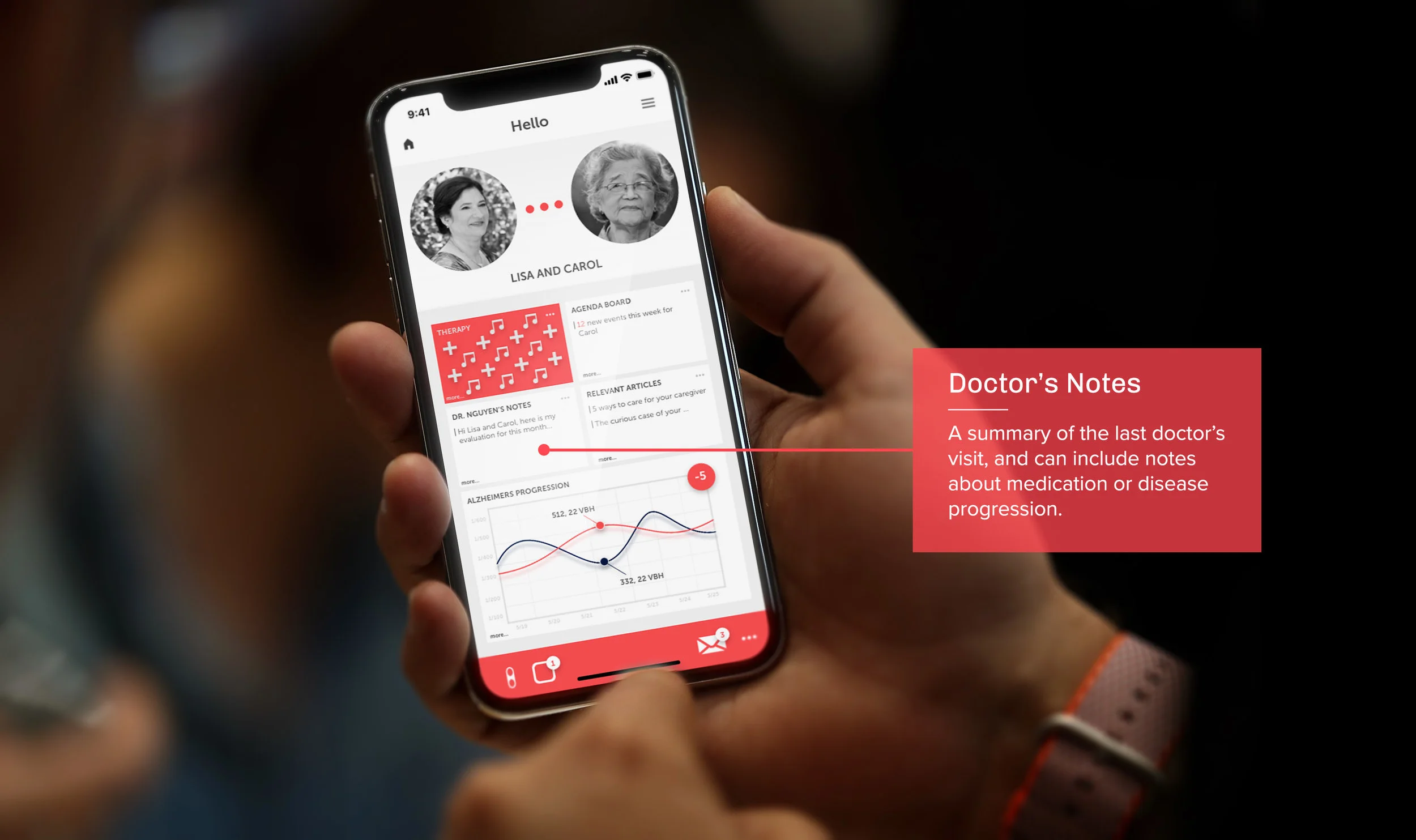
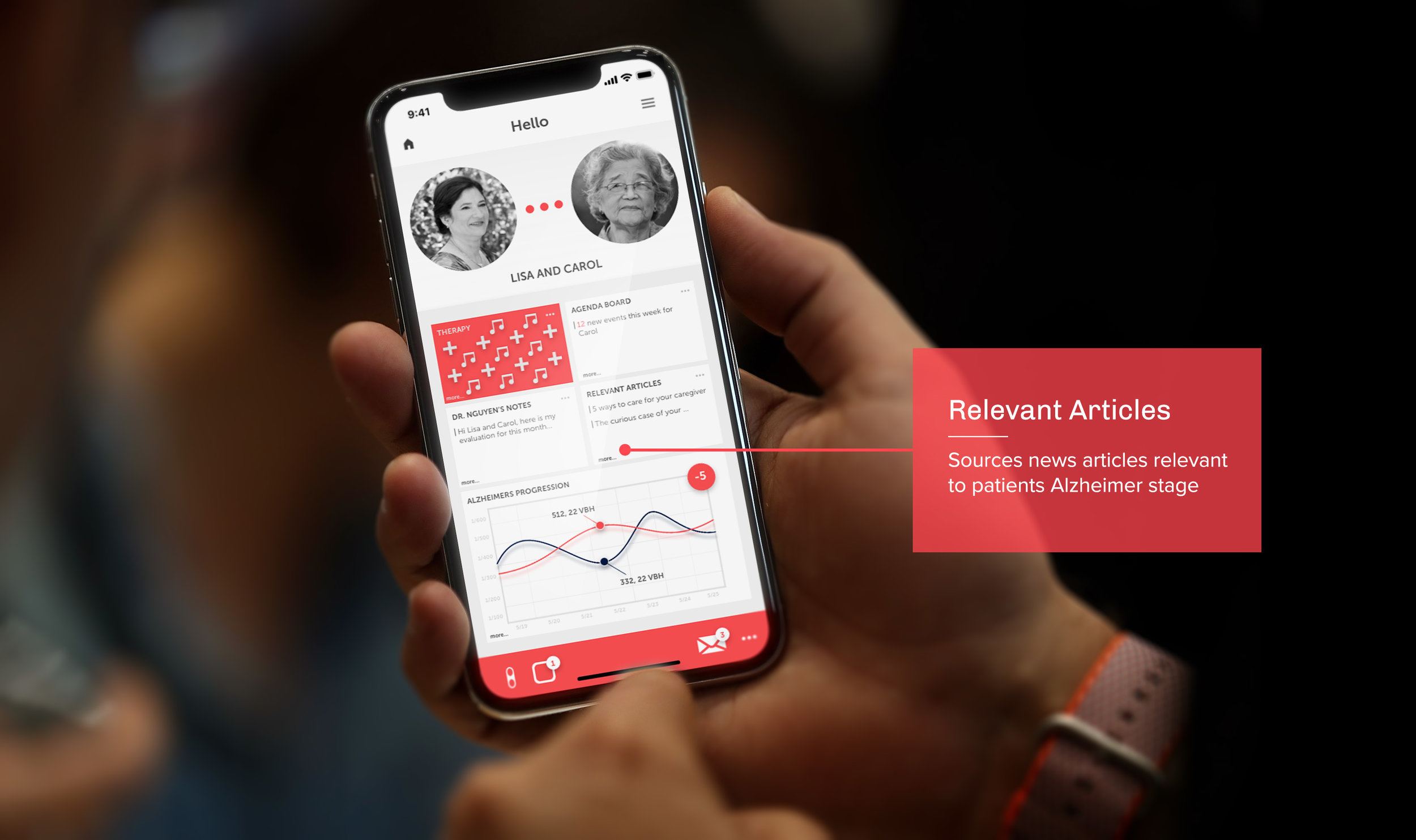
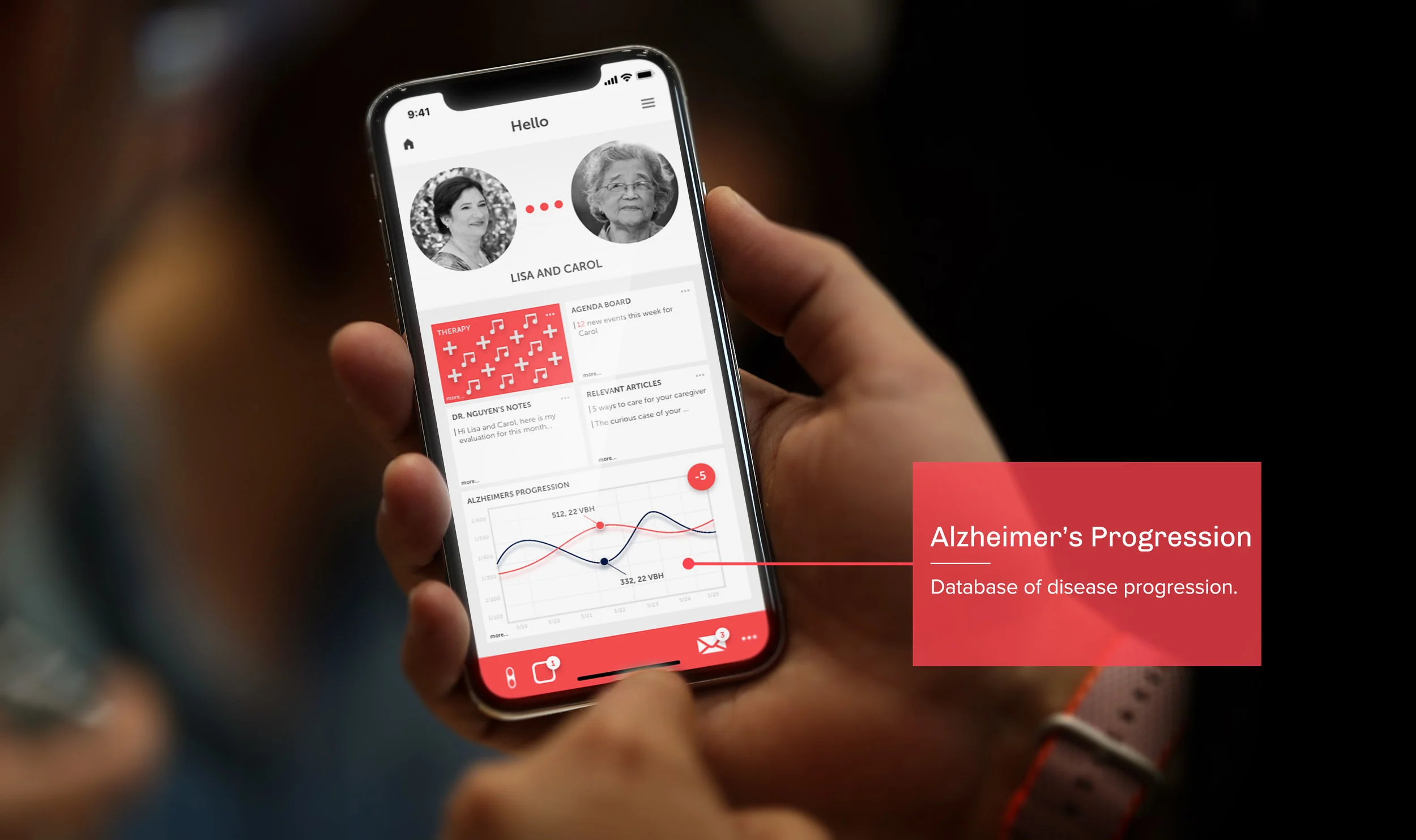
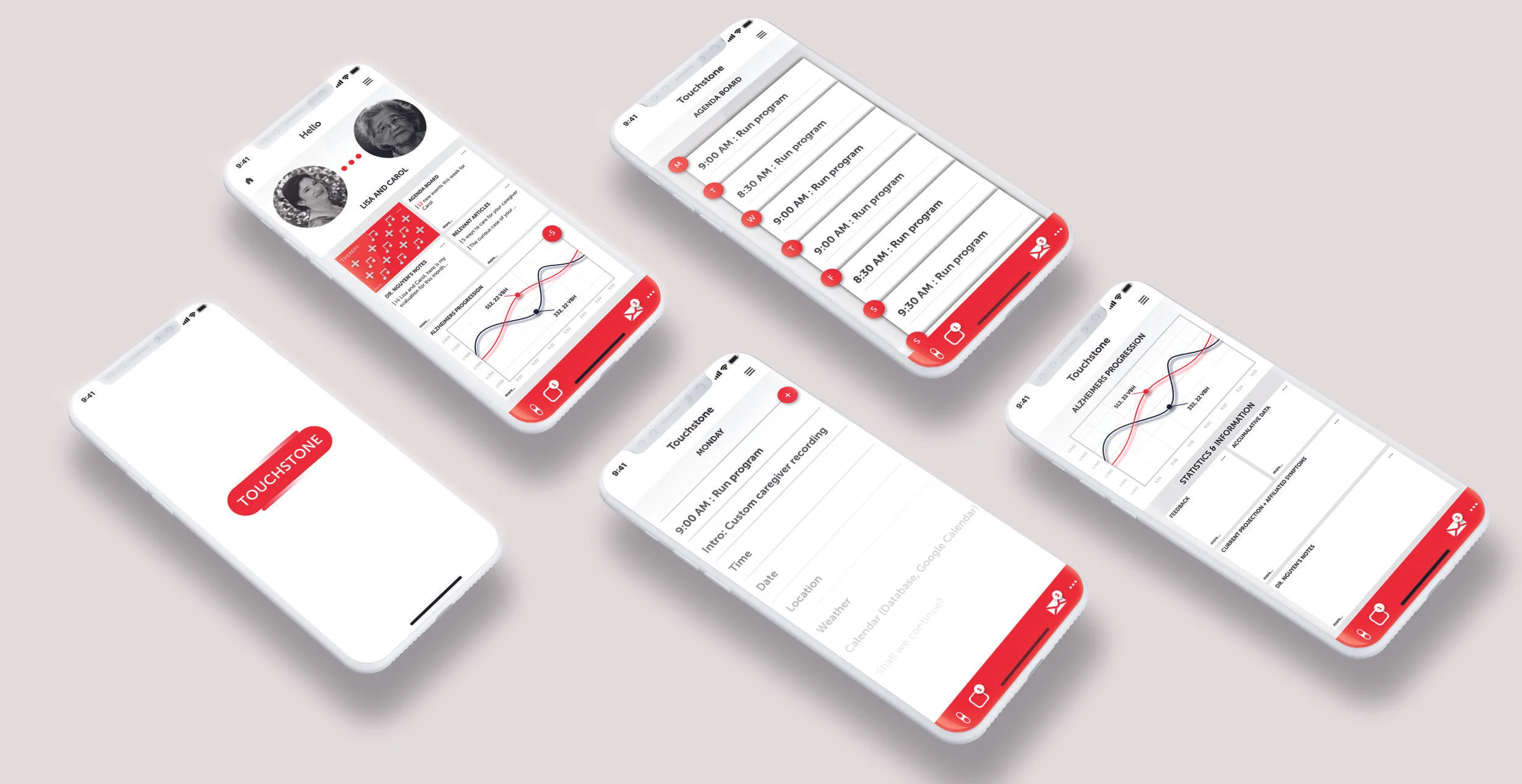
Product 4 | App